
Key Takeaways For Sustainable UGC Production
- UGC burnout comes from unlimited production hours. A capacity-first system with a hard weekly ceiling keeps work sustainable.
- Task-batching by day for scripting, filming, editing, and admin cuts task-switching and protects creative recovery time.
- Clear contract boundaries like two revision rounds and net-15 payment terms prevent unpaid labor and scope creep.
- Selling raw footage plus modular B-roll packages at 20–40% premiums raises revenue per shoot and reduces editing hours.
- Sozee’s locked-likeness AI Content Studio adds a leverage layer that separates output from filming hours so creators can take more deals without more shoot days.
Why UGC Creator Burnout Starts With Structure
UGC income is capped by a single variable: physical production hours. Every video requires concepting, filming, editing, and client communication. The average UGC creator spends 2 to 5 hours on a single finished video, which means a creator targeting 20 videos per month is committing 40 to 100 hours of production time before a single client email is answered. Demand keeps rising even when hours run out. Flare documents a creator delivering 28 UGC videos a month across nine brands, earning about $4,200 a month, who had not taken a full day off in three months and had started dreading every new brief. That creator stayed motivated. The system failed.
The consequences of ignoring the structural cause are concrete. Income stalls because quality drops and brands stop renewing. Brand deals disappear because turnaround times slip. Creators turn down work they already won because they run out of hours. Beyond ten videos a month, internal approval and back-and-forth become the bottleneck, not filming ability. The system breaks first and the creator absorbs the cost.
The Capacity-First Production System solves this by design. It sets a hard ceiling, batches tasks, enforces client boundaries, sells modular deliverables, and adds a leverage layer that separates output from filming hours.
The Capacity-First Production System: Five Operational Levers
Setting A Sustainable Weekly UGC Video Ceiling
For solo creators who shoot, edit, and manage client communication themselves, 16 to 22 finished videos per month is the sustainable range for maintaining quality. Above 25 videos per month, most solo creators report noticeable drops in output quality and personal wellbeing within 2 to 3 months. That translates to a weekly ceiling of roughly 4 to 5 finished videos. Treat that ceiling as a hard cap, not a stretch goal.
The ceiling also determines the client cap. Flare’s framework sets the client cap by dividing the deliverable ceiling by the average videos-per-client the contracts require. A creator with 8 active deals averaging 3 videos per client per month needs 24 videos. That is already above the sustainable ceiling. Working faster is not a fix, because the ceiling is physical, not motivational. The realistic options are to raise rates until some clients self-select out, reduce the client count directly, or install the leverage layer described below. In every case, maximum capacity should never become the normal workload.
Batching UGC Production By Task
Task-switching between scripting, filming, editing, and admin erodes a production day quickly. A batched weekly architecture, where each type of work occupies a dedicated block, keeps focus intact.
A practical weekly structure looks like this:
- Day 1 — Briefs And Scripts: Review all active briefs and write all scripts for the week. Scripting 5 videos in one session saves at least 2 hours per week compared with scripting each video the morning of its shoot.
- Days 2–3 — Filming: Run all shoots in dedicated blocks, not scattered across the week. Flare’s burnout-prevention guidance includes keeping at least one full shooting-free day per week to protect deep creative blocks and support recovery.
- Days 4–5 — Editing And Delivery: Edit and deliver in batches. Standard editing templates for intros, transitions, and end screens cut editing time by about 30%.
- Admin Block: Handle client communication, invoicing, and brief review in a fixed daily window, not on demand throughout the day.
The buffer stays non-negotiable. A 1 to 2 week content buffer means a sick day or a slow filming session does not turn into a missed deadline. Build the buffer during the first month of installing the system. Maintain it by treating buffer content as a fixed weekly deliverable.
Setting Clear Revision Limits In UGC Contracts
Unlimited revisions turn into unpaid labor. Two rounds of revisions is the standard in UGC contracts, with a definition of what counts as one round — ideally one consolidated set of written feedback — rather than an open-ended back-and-forth.
The contract language should specify:
- Revision Cap: One revision round for a single video, two for a bundle.
- Definition Of A Revision: Changes to the edit, not a full reshoot. A reshoot is a new deliverable at a new fee.
- Additional Revision Rate: Additional revisions billed at $50 per hour, or a flat fee of $25 to $75 per additional round.
- Rush Fees: Rush turnaround under 48 hours carries a 25 to 50% premium.
- Payment Terms: Net-15 from delivery, not from approval, so a brand cannot stall payment by never formally approving.
Weekend and off-hours policies belong in the contract too, because a creator who responds to 11 PM messages trains clients to expect that availability. By defining turnaround windows in writing, the contract sets the expectation that response time is measured in business hours, not in the creator’s willingness to be on call at any hour.
Selling Raw UGC Footage And Modular Packages
The raw-footage model fixes a major structural drag in UGC production. Brands increasingly require raw footage as a separate, itemized deliverable so in-house editors and AI editing tools can repurpose a single clip into multiple cuts for TikTok Spark Ads, Meta Advantage+, and YouTube Shorts without commissioning a re-shoot. Raw footage access is typically priced at 20 to 40% on top of the base creation fee.
The raw-footage model means a single shoot can produce multiple ads, hooks, cutdowns, and retargeting variations, because the brand re-cuts the unedited rushes internally rather than commissioning new shoots. For the creator, this structure reduces post-production time per deal, raises the effective rate, and delivers a format brands actively request.
The pitch stays simple. Offer a base package of one edited vertical video plus raw footage and two hook variants. A sample rate sheet might price one video with organic rights at $200, one video plus raw footage and two hooks at $325, and one video with paid-media rights for 12 months plus 30-day exclusivity at $500. The raw-footage tier cuts editing hours while increasing the invoice total.
Building A UGC Production Buffer And Asset Library
Batching reduces task-switching overhead and protects creative blocks, but every finished video still requires a filming session. A creator with 20 videos per month in their ceiling and zero buffer is one sick day away from a missed deadline. The buffer fixes that fragility at the operational level.
Building a reusable asset library compounds the buffer’s value. A reusable asset library raises the baseline for every new shoot. Saved setups, recurring outfit combinations, pre-written hook templates, and standardized editing sequences all shorten the time between brief and finished video. A weekly generate-launch-read-replace cycle keeps a content queue fed without a production backlog, costing one planning hour, one batch session, and one readout per week.
Batching alone cannot separate output from filming hours. A creator who batches perfectly still hits the same physical ceiling. AI-assisted production is the leverage layer that breaks that link. The next section explains how that layer works and where it fits.
UGC And AI-Generated Content For Scaling
The leverage layer complements the capacity-first system. It makes the system scalable past the physical ceiling. AI-assisted production tools that lock a creator’s likeness and reuse environments, outfits, and objects across shoots can generate additional content assets without additional filming sessions. Output grows while hours in front of a camera stay fixed.
Sozee is the AI Content Studio built specifically for this problem. Upload three photos and Sozee reconstructs a creator’s likeness with hyper-realistic accuracy, locked frame to frame, set to set, week to week. The same face and the same body appear in every generation, because the output is controlled rather than left to chance. That consistency turns AI-generated content into a brand asset rather than a novelty.
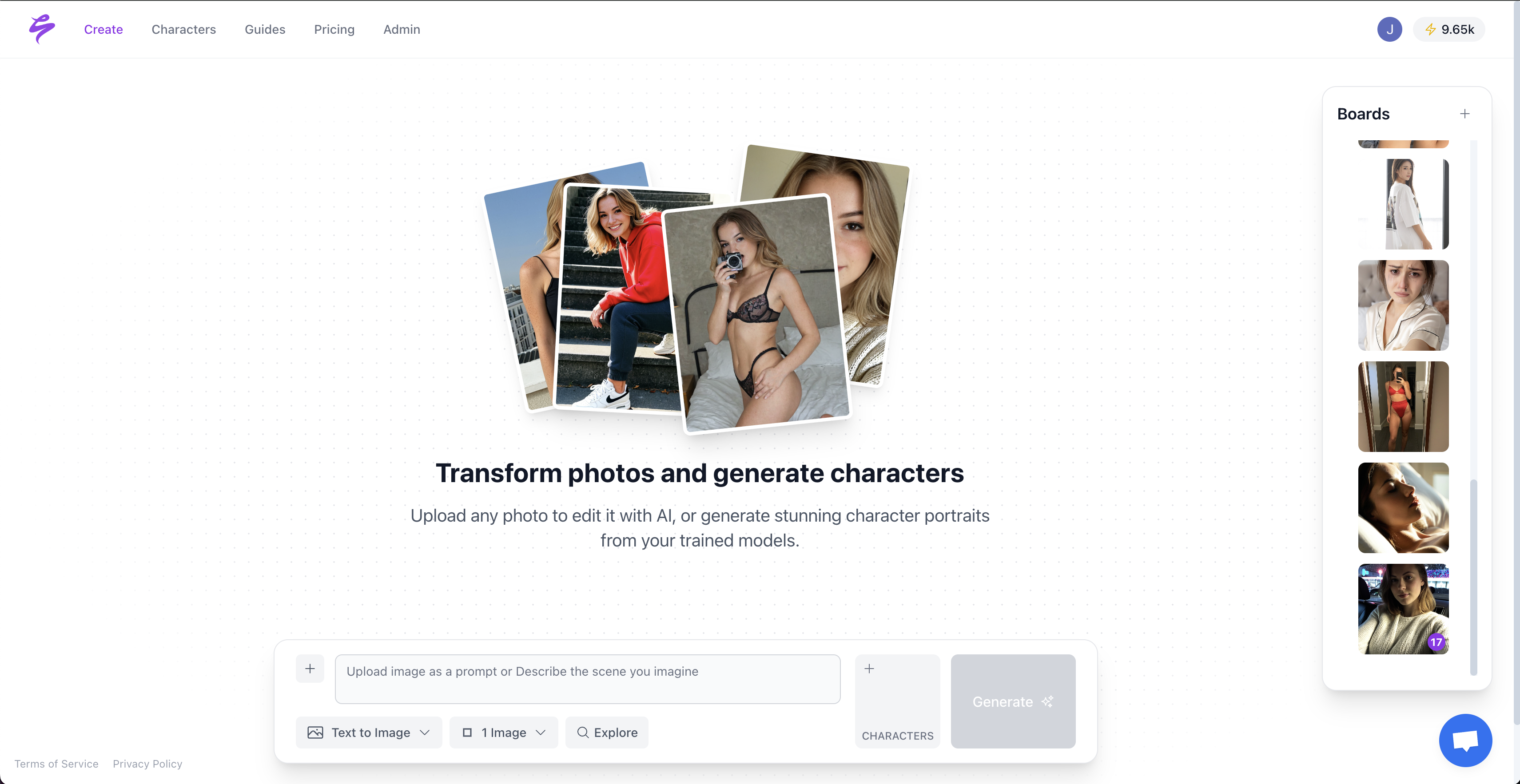
The production controls are designed for working creators, not AI experimenters. Photo Control sets five dimensions per shoot: Setting, Outfit, Shot style, Expression, and Object. Environments are built once from up to four reference photos and reused indefinitely, such as a bedroom set, a kitchen counter, or a studio backdrop. Outfits are assembled from a library by category. Objects like a product, a prop, or a branded item drop into the scene via the Object slot. A sponsor’s product goes into the Object slot and shoots across as many settings, looks, and expressions as the brief requires, all in one afternoon.
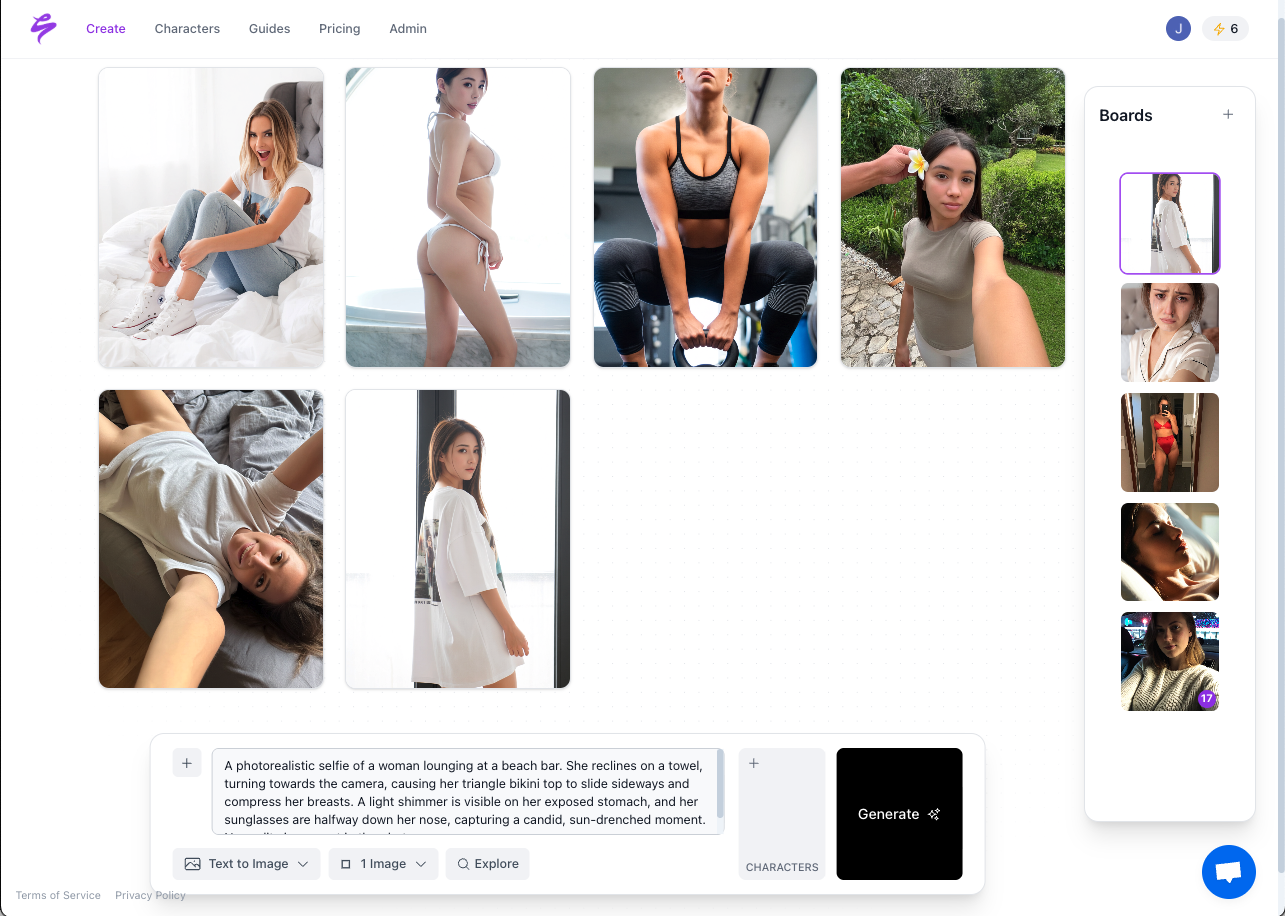
Photo Shoot takes a single image and builds a coherent set of up to ten around it, with identity, outfit, and environment locked while angle, pose, and expression vary. One frame can seed a month of content. Live Mode renders the character onto a camera feed in real time. The creator acts, the character performs, and the frames are captured as they happen. The Agent takes a half-formed idea and interviews the creator into a finished shoot setup, writing directly into the prompt bar and Photo Control panel so the shoot sits one tap from Generate.
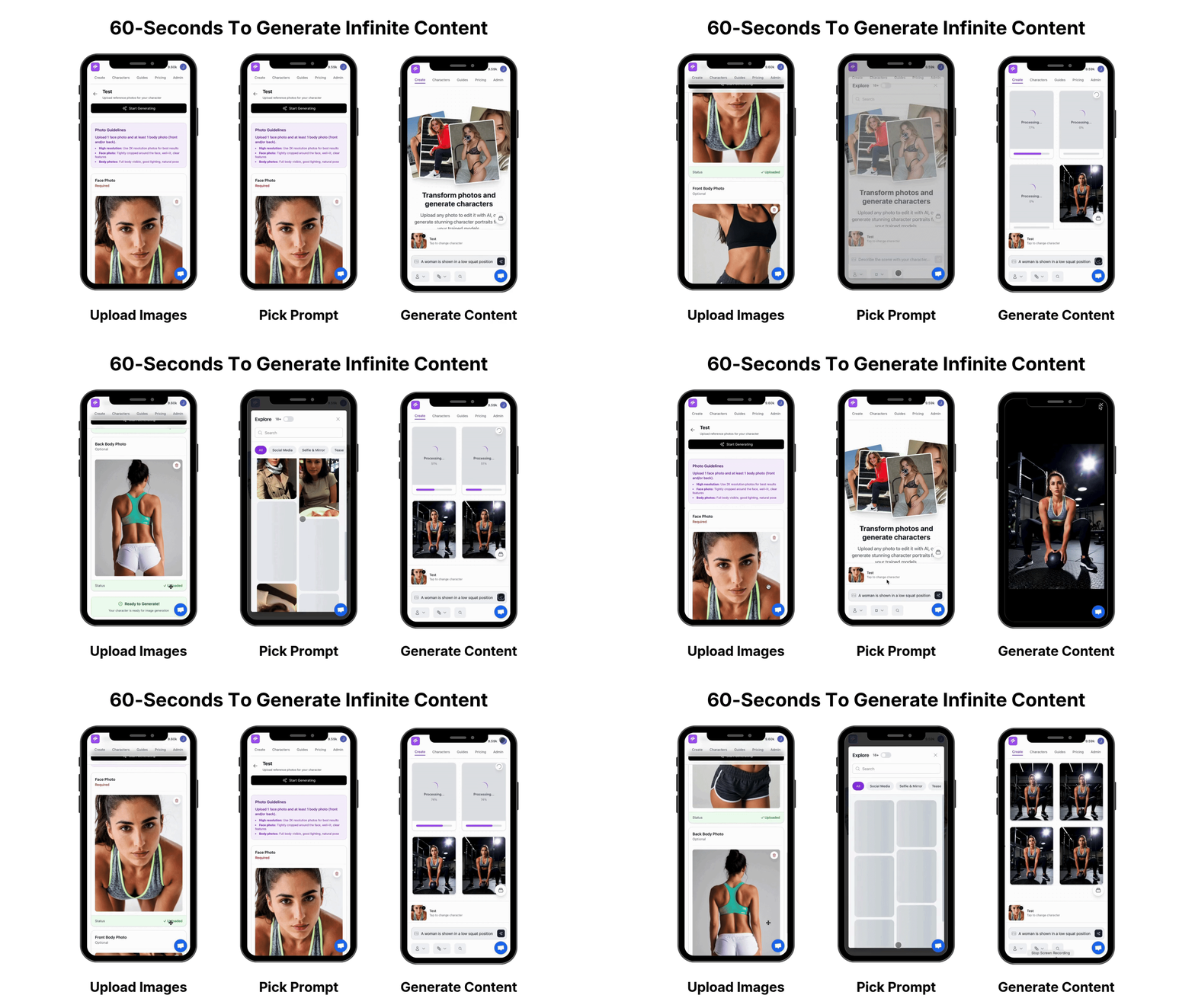
For micro-influencers managing 6 to 10 active brand deals, this leverage layer changes capacity. The deliverable ceiling expands while the filming ceiling stays fixed. Creators can accept more deals and ship more deliverables per deal without adding shoot days.
Scale Your UGC Output With Sozee
Even with a leverage layer in place, creators still ask whether the market can absorb more supply. The saturation question deserves a direct answer.
Is The UGC Market Oversaturated In 2026?
The anxiety around saturation feels real, and the data shows a shift rather than a collapse. The 2026 Collabstr Influencer Marketing Report, built on 21,000+ collaborations, found that UGC campaigns grew 133% year over year and now make up 35% of all influencer engagements on the platform, at an average of under $197 per collaboration. Demand continues. The composition of that demand is changing.
The market is saturated for generic, interchangeable creators — the free-product tier, the lifestyle montage, the trending-sound pitch — while remaining dependable for those who differentiate their offer. Generic content is saturated. Content that sells is in a permanent shortage.
Four areas of growing 2026 UGC demand include apps and software, non-English creative, services and non-glamorous businesses like banking and meal kits, and performance ad creative requiring monthly volume and iteration. These categories still need creators who can handle consistent volume. Creators who install a capacity-first system can actually accept that volume.
The capacity-first system also answers the AI substitution concern. AI video is absorbing the most generic UGC layer, such as faceless voiceover-over-b-roll, stock-style product footage, and cheap variation batches, while raising the value of the believably human layer. Creators who install the system, enforce boundaries, sell modular deliverables, and use AI as a leverage layer position themselves in the tier that remains structurally undersupplied. The table below summarizes how the capacity-first system changes each operational variable compared with traditional UGC production.
| Attribute | Traditional UGC Production | Capacity-First System |
|---|---|---|
| Weekly Video Ceiling | No defined ceiling | Defined hard ceiling: 16–22 videos/month |
| Production Schedule | Daily task-switching | Task-batched; scripting 5 videos in one session saves 2+ hours/week |
| Revision Policy | Unlimited revisions | 1–2 rounds standard; additional rounds billed at $25–$75 each |
| Deliverable Model | Edited final cuts only | Raw footage + modular B-roll packages; raw rights priced at 20–40% on top of base fee |
| Leverage Layer | Output tied to filming hours | Reusable asset libraries + AI-assisted production via Sozee |
| Client Cap | Accept all deals | Derived from ceiling ÷ videos-per-client; typically 4–6 clients maximum |
Build Your Capacity-First System With Sozee
Frequently Asked Questions (FAQ)
Can Faceless UGC Make Money?
Faceless UGC can earn real income. UGC is content made for a brand to use on its own channels and ads, so follower count matters far less than video quality and the ability to show results. More than 64% of successfully hired UGC creators have fewer than 5,000 personal social media followers. A creator with 200 followers can charge $500 per video if the content converts. The deliverable is the product, not the audience. Faceless UGC formats such as voiceover-over-b-roll, hands-only demos, and text-overlay videos work in categories where the product demonstration matters more than the presenter’s identity, though this tier is also the most exposed to AI substitution as generation tools improve.
Is UGC Still A Thing In 2026?
UGC remains a growing line item in marketing budgets. UGC campaigns grew 133% year over year on Collabstr’s platform and now make up 35% of all influencer engagements. Corporate marketing budgets allocated specifically to paid UGC video expanded by 36.5% year over year. The opportunity moved up-market rather than closed. The interchangeable tier is shrinking while the dependable-professional tier, made up of creators who deliver on brief, on time, and at volume, is understaffed. Creators who position themselves in that tier, with a capacity-first system and a leverage layer, enter a market with growing demand and fewer qualified suppliers.
How Much Do Average UGC Creators Make?
The average UGC rate is $150 to $212 per video, with a median of around $175 per video. Full-time UGC creators working with 5 to 8 brand clients and shipping 3 to 5 videos a week realistically earn $4,000 to $8,000 per month. Top earners clear $10,000 and above through retainers and premium rates. Rates vary sharply by industry. SaaS and fintech pay $300 to $600 per video, AI tools $250 to $500, beauty $150 to $350, and food and beverage $75 to $250. Usage rights add 30 to 100% on top of the base content cost. Creators who price from a structured rate card earn over 40% more than those who improvise per project, because a number on a page anchors the conversation and signals experience.
How Do I Scale UGC Content Without Burnout?
Scaling without burnout starts with the capacity-first system. Set the hard monthly ceiling described above, then derive your client cap from it. Batch production by task, with scripting in one session, filming in dedicated blocks, and editing with standardized templates. Enforce revision limits in every contract, with two rounds maximum, additional rounds billed separately, and payment tied to delivery instead of approval. Add raw footage and modular B-roll packages to your deliverable menu, priced at 20 to 40% above the base creation fee. Finally, install a leverage layer of reusable asset libraries and AI-assisted production so output grows without extra filming hours. Sozee’s locked-likeness AI Content Studio is built specifically for this step.
Conclusion: Burnout Signals A Capacity Problem
UGC creator burnout signals that a production system has hit its structural limit. When there is no defined ceiling, no batched architecture, no enforced boundaries, no modular deliverables, and no leverage layer, the system breaks before the creator does. The five operational levers, which include a weekly ceiling, a task-batched schedule, client boundaries, a raw-footage model, and a leverage layer, provide an engineering fix instead of a motivational one.
The ceiling defines what stays sustainable. The batched schedule protects creative capacity. Contract boundaries prevent scope creep from consuming the buffer. The raw-footage model increases revenue per shoot while reducing post-production hours. The leverage layer, powered by Sozee’s AI Content Studio, makes the entire system scalable past the physical filming ceiling. Locked likeness, reusable environments, Photo Shoot sets, Live Mode, and the Agent that sets up shoots function as operational infrastructure for working creators who have already won the deals and need a way to deliver them without burning out.
The capacity-first system is executable today. The leverage layer already exists.
Put The Leverage Layer To Work