
Key Takeaways
- AI influencers earn through content-as-a-service, affiliate marketing, sponsorships, subscriptions, and digital products. Consistent income comes from an active business strategy, not passive traffic.
- The primary bottleneck is building audience trust and maintaining a consistent posting cadence. Image generation capabilities are rarely the limiting factor.
- Realistic earnings scale with follower count and engagement. Under 10K followers typically yields $0–$300 per month. At 100K–500K followers, operators with products or representation can reach $8K–$40K per month.
- Most successful AI influencers start with content-as-a-service or affiliate work before brand sponsorships. They keep likeness locked, environments consistent, and publishing schedules reliable.
- Sozee helps creators avoid common failure points by keeping character likeness consistent, reusing assets, and offering native scheduling tools that support real monetization strategies.
How AI Influencers Actually Make Money
The monetization tiers below are ordered by how quickly a new AI influencer account can realistically reach them.
- Content-as-a-Service and UGC Work for Real Brands. Producing ad-ready content for brands that already have an audience generates revenue before an owned following exists. Because a brand pays per deliverable, such as a set of product images or a short video clip, the operator’s audience size does not affect whether they get paid. That is why this is the fastest path to a first paying dollar for most new accounts.
- Affiliate Links. Embedding tracked links in posts or bios requires only a small, engaged audience and a product that fits the character’s niche. Commission rates vary widely. The barrier to entry stays low, and revenue can begin before an account reaches 5,000 followers.
- Brand Sponsorships. Paid posts and story placements require a meaningful, engaged following and at least 30 published posts for brands to evaluate. Brand deals lag follower count by 60–90 days and rarely provide durable primary income below 100,000 authentic, highly engaged followers.
- Subscription Platforms. Platforms like Fanvue, which publishes an 80/20 revenue split in favor of creators and explicitly permits AI-generated media within stated limits, allow subscription revenue to exceed $1,000 per month well before an account becomes large if the audience is willing to pay.
- Digital Products and Brand Extensions. Ebooks, course bundles, prompt packs, and coaching tiers convert an audience into recurring revenue that does not depend on platform algorithm changes. Front-end digital products typically price between $9 and $47, with courses ranging from $97 to $497, sold through storefronts like Gumroad, Stan Store, or Whop.
How Much AI Influencers Earn At Different Follower Counts
Follower count, engagement rate, and what the account has to sell work together to determine income. A conservative 2026 earnings model estimates four tiers. Under 10,000 followers produces $0–$300 per month. At 10,000–50,000 followers, accounts with a product and active comment replies yield $300–$2,500 per month. At 50,000–100,000 followers, the range is $2,000–$8,000 per month. At 100,000–500,000 followers, operators with a course or talent representation reach $8,000–$40,000 per month. Niche explains the wide range at every tier. These are reported ranges, not audited figures.
Hootsuite’s 2026 benchmarks, based on an analysis of over one million social posts, put average engagement rates at 3% for Instagram, 2.7% for Instagram Reels, 1.5% for TikTok, and 0.8% for Facebook. Because engagement rate typically declines as follower count rises, a good rate generally falls between 1% and 5% regardless of account size. That is why brands evaluating an AI influencer weight engagement signals such as saves, shares, profile visits, and DM inquiries more heavily than raw follower count.
Reality Check On Headline AI Earnings
All public AI influencer earnings figures are creator-reported and unaudited unless otherwise specified. The four cases below are the ones most frequently cited in coverage, and each illustrates a different monetization model rather than a typical outcome.
- Yang Mun, an AI monk persona with roughly 2.5 million Instagram followers, generated approximately $213,000 gross in his first 90 days per dashboard screenshots published by VirtualHumans. The $300,000 profit figure is self-reported and not an audited P&L. His revenue comes from an owned product ladder, including an ebook, a course, a subscription, and coaching.
- Emily Pellegrini, a Midjourney-created persona on Fanvue, earned approximately $10,000 in six weeks and a Fortune-reported peak month of around $23,000. The million-dollar headlines around her include course revenue, not platform payouts alone.
- Aitana Lopez, built by The Clueless in Barcelona, has around 400,000 Instagram followers and earns a peak of roughly €10,000 per month with an average closer to €3,000, per creator-stated figures. The peak is most often quoted, while the average is typically omitted.
- The widely cited $34,000-per-post figure for Lu do Magalu, the corporate AI mascot for Brazilian retailer Magazine Luiza, is an estimate produced by multiplying a human influencer rate card by follower count, not disclosed revenue.
AI Influencer Income Compared To Human Creators
The AI advantage comes from production volume and consistency. The rate per post is comparable to human influencers. At comparable follower counts, reported earnings sit in similar ranges: Aitana Lopez at 350,000 followers earns $3,000–$10,000 per month, while a human influencer at the same count in fashion or lifestyle earns $3,000–$8,000 per month on average. The structural advantage of the AI model is lower operating cost and higher net margin. The table below breaks down how that advantage appears across earnings, operating cost, hours worked, and net margin at comparable follower counts.
| Metric | AI Influencer | Human Influencer |
|---|---|---|
| Reported monthly earnings at ~350K followers | $3,000–$10,000 (creator-reported, unaudited) | $3,000–$8,000 (industry average) |
| Typical operating cost per month | $50–$200 | $500–$3,000 |
| Hours per week at $3,000/month | 10–15 hours (~$46–$57/hour) | 25–35 hours (~$20–$27/hour) |
| Estimated net margin at $5,000/month | ~$4,500–$4,800 | ~$2,500–$3,500 |
What The First 90 Days Of An AI Influencer Account Look Like
The operational path from character setup to first paying dollar follows three distinct stages.
Weeks 1–2: Build The Character And Lock The Look
Skipping the character bible is the reason most AI personas drift into a visibly different face by week three. Define stable visual features, voice, content pillars, and disclosure language before generating a single post. Create twelve posts before public launch but publish only four during the pilot phase. That buffer tests whether the identity can support a month of content.
Weeks 3–6: Establish A Posting Cadence And Find The Format
Meaningful growth benchmarks for a new AI influencer account are performance metrics rather than follower counts: 3.5–8% engagement rate on Instagram nano-tier, 5–12% on TikTok nano-tier, 50%+ watch-through rate on Reels, and 1%+ save rate on educational carousels. Track saves, shares, profile visits, and DM inquiries. These signals matter more than raw follower count to a brand evaluating an AI influencer.
Weeks 7–12: Pursue The First Paying Work
The first revenue for most AI influencers comes from affiliate marketing in month 3–4, earning $200–$500 per month with 3,000–5,000 followers and a 4–5% engagement rate. Content-as-a-service and UGC work for brands can generate revenue before this point because the deliverable is content, not audience reach. The minimum threshold before introducing any monetized content is a consistent engagement rate above tier benchmark for 60 consecutive days.
Lock Your Character And Start Posting
Why Many AI Influencers Never Get Paid
AI influencer accounts that fail share three traits: inconsistent posting, no clear niche, and trying to monetize too early. These traits show up in specific failure modes.
- Inconsistent Likeness. The character’s face, body, clothing, or environment changes between images and videos, weakening recognition and trust. A brand cannot build a campaign around a persona that looks different every week.
- Posting Cadence Collapse. The most common reason AI influencer accounts stop growing is lack of structure: tools get stacked without connection, posting schedules shift without data, and content ideas are tested in isolation, so nothing compounds.
- Low Trust With Audiences And Brands. When consumers notice AI-generated content in brand marketing, 31% trust the brand less against 7% who trust it more. Granny Spills’ founders told TIME that reach came easily, while trust at checkout lagged.
- Platform Policy And Disclosure Problems. TikTok demonetized Granny Spills for “unoriginal” content, and accounts that hide AI labels have already been restricted in public tests. Disclosure functions as an operational constraint rather than a legal footnote.
- Treating Image Generation As The Business. The persona is a traffic source; the product is the business. Operators who focus on generating images without building a product ladder or content-as-a-service offering have no monetization path regardless of follower count.
Turn Your Persona Into A Real Business
The Legal And Platform Disclosure Rules For AI Influencers
Disclosure failures are one of the failure modes above, but they carry consequences beyond lost reach. Disclosure requirements act as operational constraints that affect distribution, monetization eligibility, and legal liability. Operators must navigate four overlapping frameworks.
FTC Endorsement Guides
The FTC Endorsement Guides (16 CFR 255.0) define an endorser as a party whose opinions the message appears to reflect and state an endorser “could be or appear to be an individual, group, or institution”. That language brings virtual personas inside the guides. Maximum civil penalties stand at $53,088 per violation in 2026. The FTC’s Disclosures 101 for Social Media Influencers requires material connections to be disclosed clearly and conspicuously, and that duty applies even when the endorser is a synthetic AI persona.
Instagram And Meta
Instagram announced a profile-level AI label on August 31, 2026: profiles featuring an AI-generated person that skip the label may lose reach and become ineligible for recommendations, while creators who apply it are not penalized. Meta’s originality policy targets reposting other creators’ work and does not mention AI-generated content, and Meta states AI labels do not automatically reduce distribution.
TikTok
YouTube
YouTube requires disclosure when a creator uses AI to meaningfully alter or generate photorealistic content, and states that disclosing does not limit a video’s audience or its eligibility to earn money. YouTube’s mass-production policy makes AI-generated content built from generic templates ineligible to monetize but explicitly permits content expressing a unique creative voice.
EU AI Act Article 50
EU AI Act Article 50 transparency rules apply from August 2, 2026, requiring providers to apply a machine-readable mark to synthetic content and deployers to disclose deepfakes with clear labels, with fines reaching EUR 15 million or 3% of worldwide annual turnover. Any account distributing to EU audiences is subject to these rules.
New York State
The Faster Path: Content-as-a-Service And UGC Work For Real Brands
While disclosure rules shape what operators can publish, the fastest revenue path sidesteps the audience-building problem entirely. The most common quiet pivot for AI influencer operators is discovering that brands want to buy the content itself, UGC-style clips of a convincing synthetic person talking about a product, sold per asset, rather than rent the operator’s small audience. At that point, the operator runs an ad-creative business rather than an influencer business, and the revenue timeline compresses from months to days.
In this model, the deliverable is a set of product images or short video clips featuring the AI character alongside the brand’s product. The brand’s existing audience handles distribution. The operator’s AI character provides a consistent, controllable, on-brand face that a human model shoot cannot match at the same cost or speed. Brands are increasingly tying creator compensation to real business outcomes through hybrid base-rate-plus-performance models, and a well-produced AI UGC deliverable competes directly on cost-per-acquisition rather than on follower count. This path generates a first paying dollar before an owned audience exists, as noted in the monetization tiers above, and it builds the production discipline that an owned influencer account requires anyway.
How Sozee Removes The Bottlenecks That Stall AI Influencers
Sozee is built for creators who monetize AI influencers. Each capability maps directly to the failure modes described above.
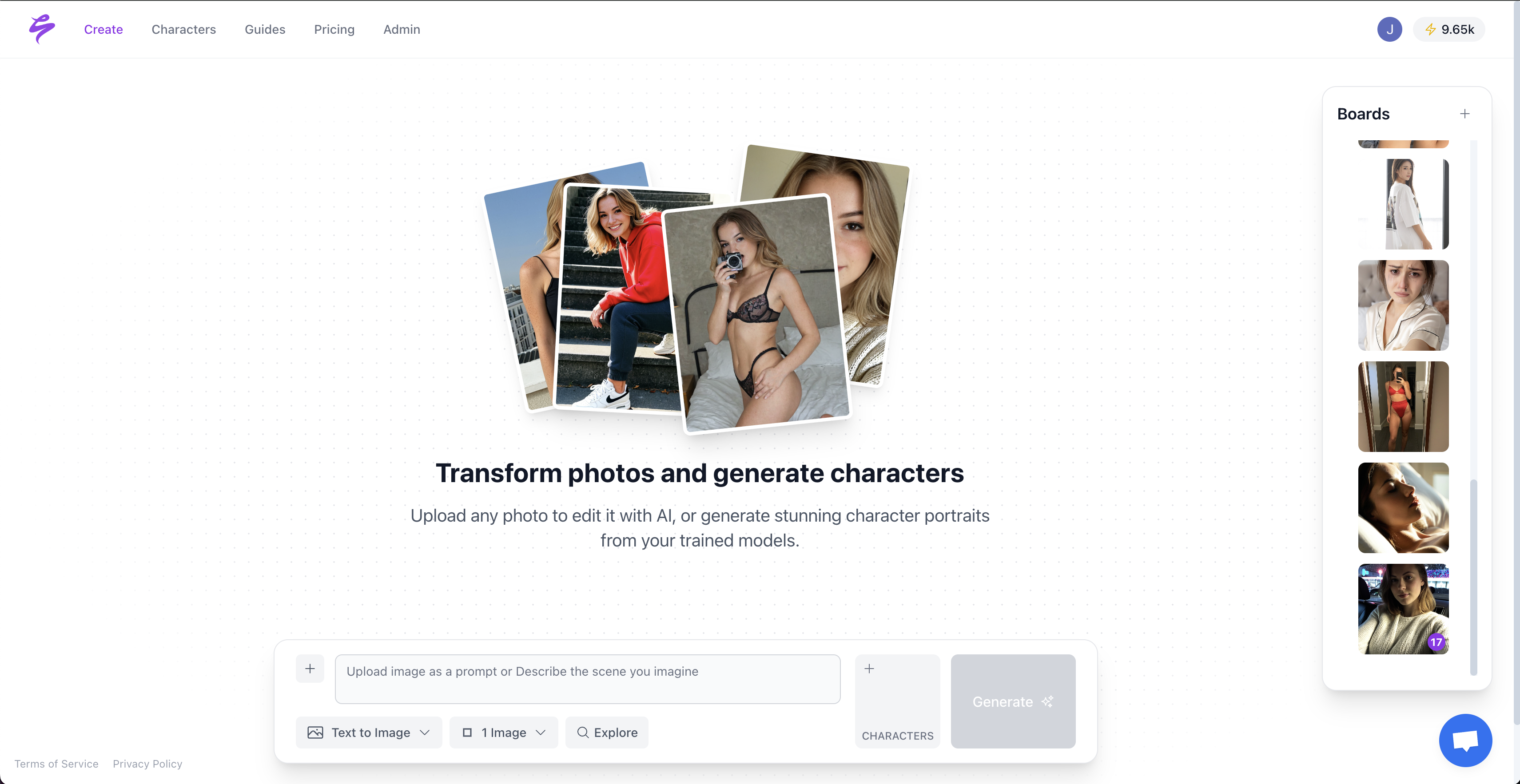
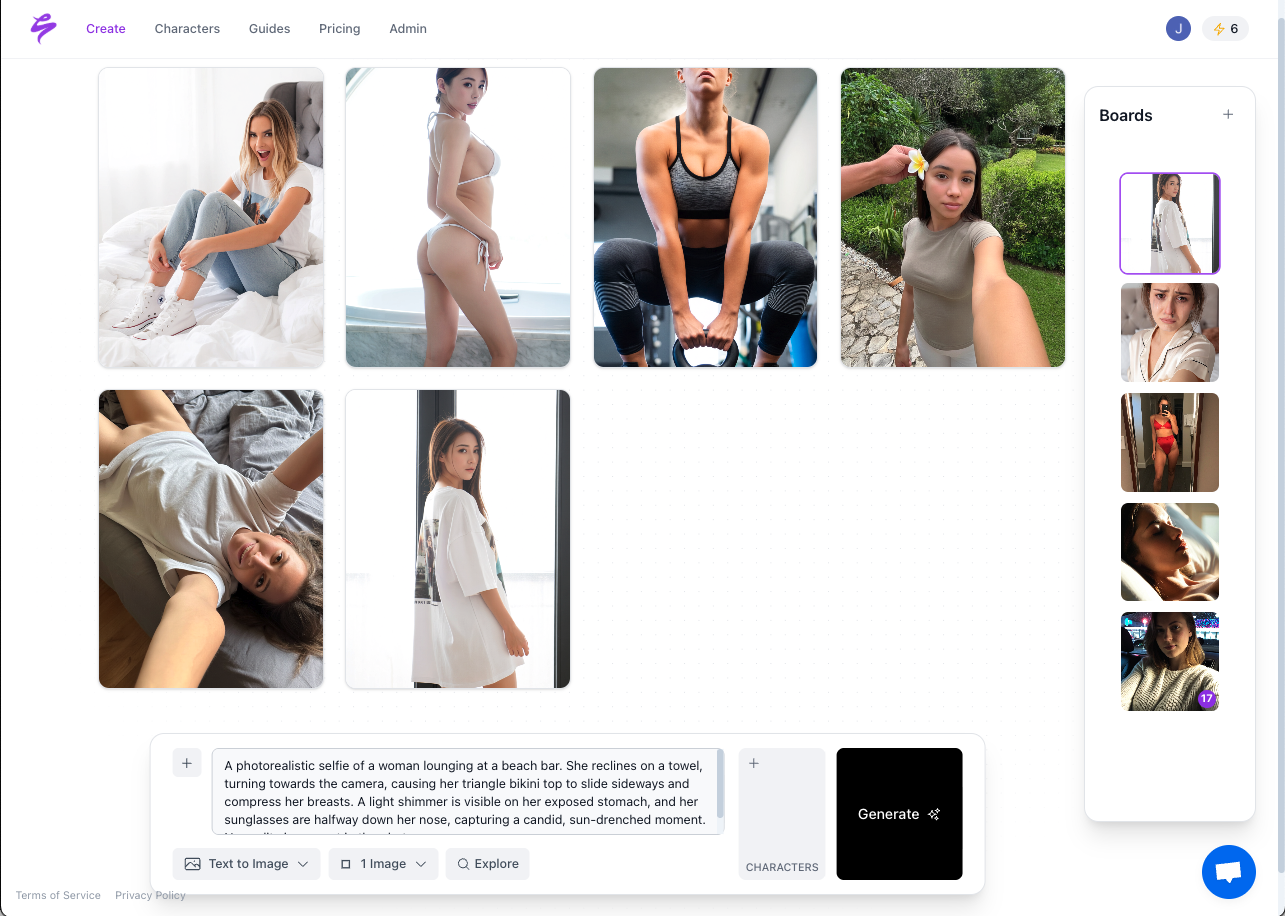
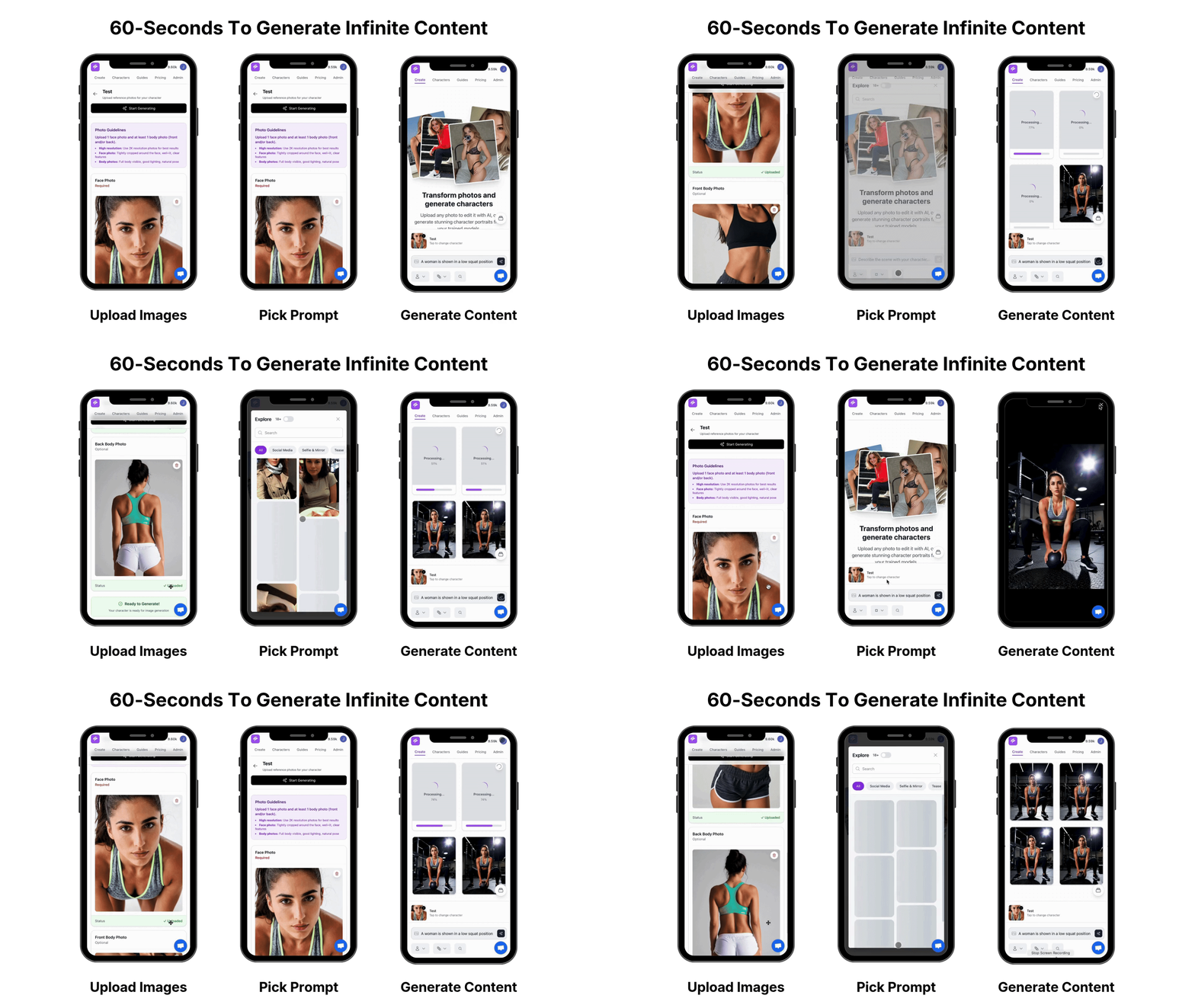
- Locked Likeness Across Every Frame. Sozee reconstructs a character’s likeness from as few as three photos. That likeness holds across every generation: same face, same body, every set, every week. This consistency eliminates the identity drift that prevents a recognizable brand from forming.
- Reusable Environments, Outfits, And Objects. Build a setting once from up to four reference shots and reuse it indefinitely, then assemble outfits from individual pieces and add up to four props per set. Because every asset compounds, and each shoot makes the next one faster, running out of assets stops being a risk to your posting cadence.
- Photo Shoot. One image becomes a coherent, locked set of up to ten. Identity, outfit, and environment stay consistent while angle, pose, and expression vary. A single setup session can produce a month of content.
- Live Mode. Real-time character transformation runs on a webcam or phone. The creator acts and the character performs. Frames are captured as they happen, which adds a production dimension no static generation tool offers.
- The Agent. For creators who do not want to direct, the Agent interviews a half-formed idea into a finished shoot setup. It resolves character, setting, wardrobe, shot style, expression, and output, then writes directly into the prompt bar and Photo Control panel. One tap triggers generation.
- Native Scheduling And Analytics Per Character. Connect Instagram, TikTok, X, Facebook, Reddit, and Fanvue per character, then schedule photos, carousels, reels, and stories with platform-specific captions from the same place. Because analytics split what Sozee posted from what the creator posted, you can measure whether consistent AI-assisted publishing actually improves your cadence.
- Teams And Isolated Workspaces. Agencies running multiple AI influencers operate from one login with fully isolated workspaces. Each workspace has its own characters, vault, connected accounts, and credits.
General-purpose AI tools ship a prompt box. Sozee ships a studio. That difference separates generating images from running a brand.
Scale Your AI Influencer Studio With Sozee
Frequently Asked Questions
Here are answers to the questions operators ask most often about AI influencer income, platform rules, and disclosure obligations.
How Much Do AI Influencers Make?
All public figures are creator-reported and unaudited. As covered in the earnings section, the realistic range runs from $0–$300 per month under 10,000 followers to $8,000–$40,000 per month at 100,000–500,000 followers for operators with a product ladder. Mid-tier operators interviewed by the NY Post in 2026 reported $2,100–$9,000 per month, which offers a more representative range than the outlier cases that dominate headlines. The accounts at the top of the range run owned product ladders rather than pure brand-deal income.
How Many Followers Do You Need To Make $1,000 A Month With An AI Influencer?
There is no single follower threshold because income depends on what the account has to sell. As noted in the monetization tiers, subscription and digital product revenue can exceed $1,000 per month well before an account reaches 10,000 followers if the audience is willing to pay. For brand sponsorships, the threshold is higher, but there is no follower minimum for paid partnerships or sponsored posts; brands regularly pay creators with as few as 1,000 followers, and engagement rate (commonly a 3% floor, with 5%+ preferred) matters more than follower count. Engagement rate, niche specificity, and product fit matter more than raw follower count at every tier.
Can AI Influencers Make Money On Instagram And TikTok?
AI influencers can earn on both platforms, within platform-specific constraints. Instagram does not penalize AI-labeled content in distribution and permits AI influencer accounts to participate in monetization programs, including Meta’s Creator Fast Track, provided the profile-level AI label is applied. TikTok has demonetized accounts for “unoriginal” content, and Granny Spills lost TikTok payouts while keeping its Instagram and Facebook income. Its Creator Fund pays very low per-view rates regardless. Both platforms require AI-generated content labels on realistic synthetic media. Subscription and product revenue through external storefronts is not platform-dependent and remains available on both.
What Are The Legal Disclosure Rules For AI Influencer Brand Deals?
Three separate disclosures may be required for a single sponsored post. Operators may need to disclose that the persona or media is AI-generated, that a sponsor paid for or provided something of value, and that any demonstration or testimonial is simulated. The FTC Endorsement Guides apply to virtual personas and carry civil penalties, and the disclosure section above covers current figures. Instagram requires a profile-level AI label for accounts featuring AI-generated people. TikTok requires per-post AI content labels on realistic synthetic media. YouTube requires disclosure when AI meaningfully alters or generates photorealistic content. EU AI Act Article 50 and New York’s synthetic performer law add overlapping requirements for EU and New York audiences. Operators should treat disclosure as a recurring operational step rather than a one-time launch post.
Can I Use AI To Make Me Rich?
AI tools reduce the production cost and time required to run a content business, but they do not replace the business itself. The operators who generate meaningful income from AI influencer accounts treat them as startups with tracked metrics, dedicated hours, and constant iteration, not as passive income machines. The structural advantage of the AI model is lower operating cost, higher net margin, and the ability to produce content at a volume a human creator cannot sustain. Whether that translates to wealth depends on niche selection, product strategy, posting consistency, and the quality of the audience built over time. Most accounts earn minimal income in the first 2–3 months, and those that reach $10,000 per month typically do so after 12–18 months of consistent operation.
Conclusion: The “Yes, But” Answer
AI influencers can generate real revenue across multiple streams, including affiliate income, digital products, subscriptions, brand deals, and content-as-a-service work. The bottleneck is audience and trust. Image generation is rarely the limiting factor. The accounts that reach a first paying dollar lock a recognizable likeness from day one, hold a posting cadence through the first 90 days, and pursue content-as-a-service or affiliate work before waiting for sponsorships to arrive.
As production costs continue to fall and disclosure norms tighten under the FTC, EU AI Act, and platform-level labeling requirements, competitive advantage will favor operators who build genuine audience relationships and owned product ladders. Generating more images without that foundation will not close the gap. The market is still early: most niches remain underpopulated with AI creators, and the operators earning the most started 12 to 24 months before the current tool generation existed. The window is open. The work is real.
Start Building Your AI Influencer Business With Sozee