
Key Takeaways
- Sponsorship asset delivery bottlenecks come from intake and approval loops rather than design capacity.
- A centralized portal with structured intake forms replaces email chains and ensures all brand assets arrive correctly formatted before production begins.
- Standardized specs, defined approval windows, and real-time tracking dashboards prevent revision loops and missed deadlines across every deliverable.
- Templated placements combined with AI-assisted production tools like Sozee compress full campaign asset sets from weeks to an afternoon while maintaining locked likeness consistency.
- Sozee streamlines the entire sponsorship fulfillment workflow from intake through proof-of-delivery, helping teams scale without adding headcount.
Streamline Your Sponsorship Workflow
How To Deliver Sponsorship Assets Faster
This seven-stage workflow treats sponsorship asset delivery as a system. Each stage builds on the last, moving from intake through AI-assisted production to proof-of-delivery.
Stage 1 — Sponsor Asset Intake Form (Centralized Portal)
A centralized portal gives sponsors a single secure link where they upload logos, brand files, and copy directly. This setup removes email chains and keeps every asset in one place.
Send this link at contract signing, well before the event. A coordinator emailing 15 sponsors two weeks before an event can expect only five to respond immediately, three of those with wrong formats, five the day before, and five never. That pattern creates a production crisis instead of a predictable workflow.
Your intake form should collect the following fields:
- Logo files in vector formats (AI, EPS, or SVG) and high-resolution PNG with transparent background
- Brand guidelines document
- Approved placements and dimensions
- Deadlines per deliverable
- Approved copy and messaging
- Usage rights and exclusivity terms
- Primary contact name, title, and email
Structured sponsor onboarding saves event teams 12 or more hours per event. Platforms like Aether that reject assets failing upload validation and maintain per-asset version tracking with parent-version linking prevent the version-control nightmare of mislabeled “final” files. Platforms like SponsorCX support centralized sponsorship asset management workflows that replace scattered spreadsheets and disconnected tools with a single source of truth. SponsorUnited centralizes sponsorship lifecycle information, though its specific asset-management fulfillment features are not detailed in the available evidence.
Stage 2 — Standardized Specs Upfront
Standardized specs define technical requirements such as dimensions, file formats, resolution, and naming conventions before the deal closes. Clear specs prevent revision loops and rework.
Tie specs directly to your media kit. Every placement should carry its own spec sheet with pixel dimensions, safe zones, accepted file types, resolution minimums, and a naming convention such as 2026-10-03_sponsorname_logo_rgb.png. Wrong files such as old logo versions, stretched logos, misplaced assets, and low-quality JPGs used instead of approved PNG or print PDF versions cause many delivery mistakes. Publishing specs before the deal closes means the sponsor knows exactly what to send before they send anything.
Stage 3 — The Approval Window
With specs in place, the next risk is review delays. A defined approval window keeps deliverables moving.
An approval window sets a clear timeframe for each stage of the review process, including draft, feedback, and final sign-off. These boundaries prevent deliverables from stalling indefinitely.
Use these concrete timelines:
- Draft delivered within 3 days of receiving all sponsor assets
- Sponsor feedback due within 48 hours of draft delivery
- Final approval and sign-off within 2 days of revised draft
Approval timelines that vary wildly between engagements signal a lack of standardized approval workflows and create real production problems for sponsors managing their own internal timelines. Publishing these windows in your sponsor onboarding materials ensures both parties know what to expect before work begins. To keep assets moving through each gate, assign a single named role as the accountable owner.
Stage 4 — Real-Time Tracking (Sponsorship Fulfillment Tracker)
Even with clear windows, you need visibility into where every deliverable stands. A real-time tracker provides that visibility.
Real-time tracking uses a shared dashboard that shows every deliverable’s status, owner, and deadline at a glance. This approach replaces email searches and status meetings.
Build a shared tracker with these columns:
- Sponsor name
- Deliverable description
- Named owner
- Status (not started, in progress, at risk, blocked, completed)
- Deadline
- Approval stage
- Proof of delivery link
Without central visibility into upcoming, overdue, and completed obligations, teams manage by memory, inbox searches, or last-minute status meetings. Every deliverable should be assigned a named individual owner rather than a team, because a team-owned deliverable often belongs to no one in practice. Automated reminders keep the tracker active, and SponsorCX handles approval routing, deadline reminders, and status updates so no deliverable falls through the cracks.
Stage 5 — Templated Vs. Custom Work
Standard placements such as social post overlays, email header banners, and fixed-dimension event signage work best as templates. Templating these assets and batching production frees time for higher-value creative.
Build the template once per sponsor tier and reuse it across every activation. Reserve custom creative for high-value title sponsors where differentiation justifies the production time.
Speed compounds at this stage. A templated workflow means a new deliverable for a returning sponsor takes minutes instead of hours. A campaign with 12 creator partners across three platforms may require 80 to 120 supporting assets, and traditional production of that volume takes weeks. Batching standard placements collapses that timeline before AI production even enters the picture.
Stage 6 — AI-Assisted Production
Once your templates are set, AI-assisted production compresses the remaining custom work even further. This stage shifts the timeline from days to an afternoon.
Sozee is a focused AI-assisted production solution for sponsorship asset delivery.
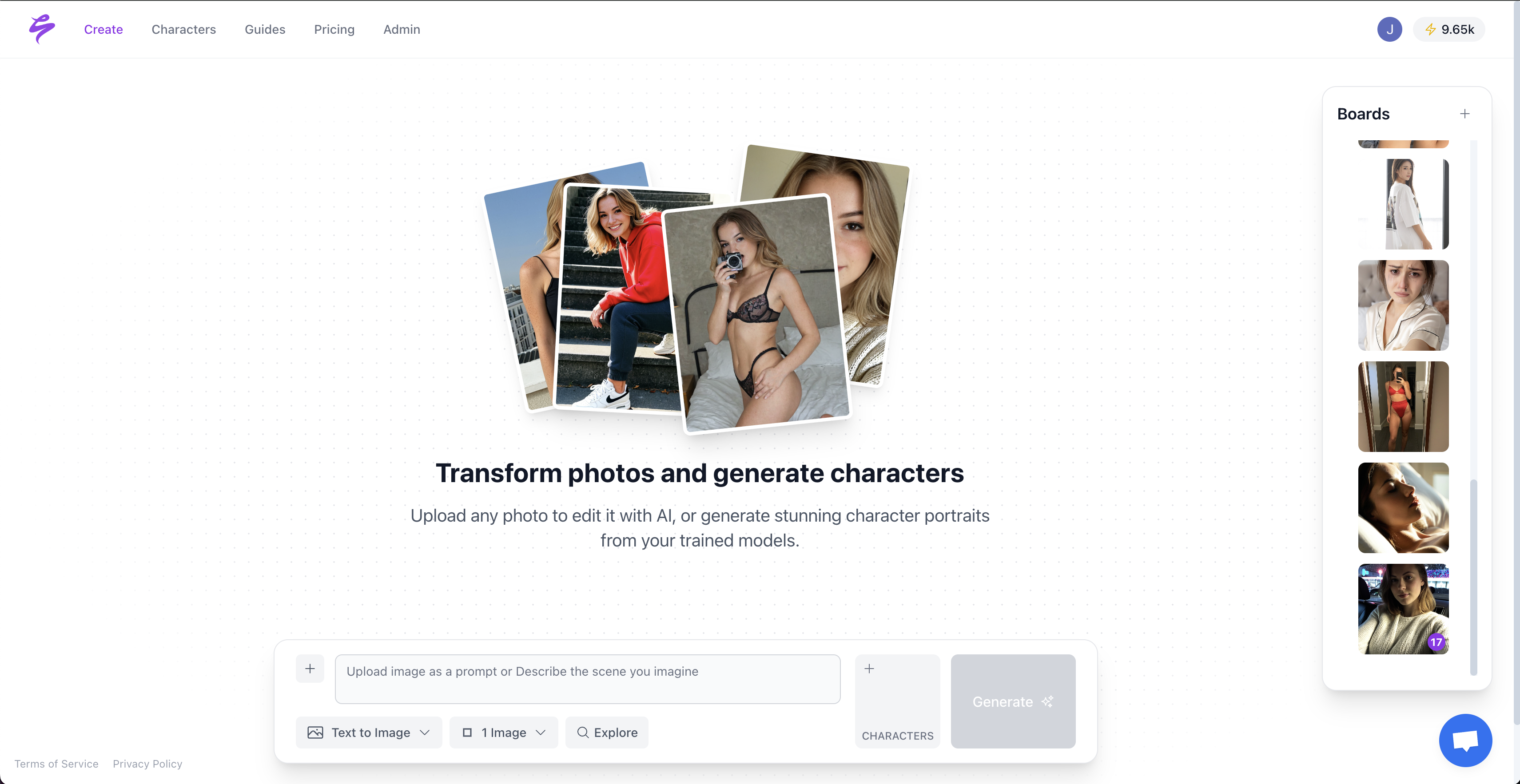
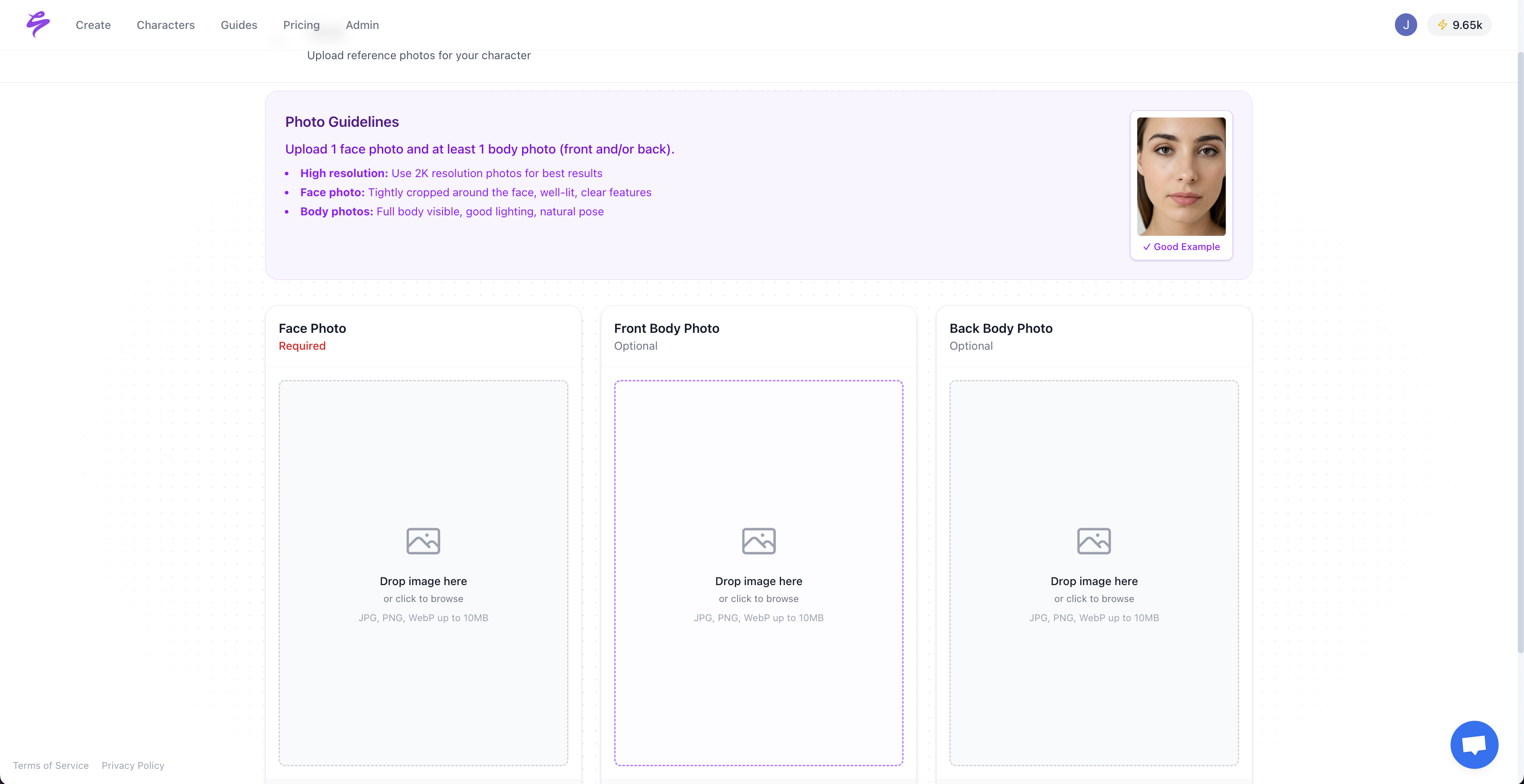
Drop the sponsor’s product into Sozee’s Object slot and it appears in the scene, naturally lit, correctly positioned, and consistent across every frame. Place sponsor apparel in the Outfit slot and the look assembles itself. Locked likeness keeps every asset in the deliverable looking like the same person on the same day. You avoid re-rolling prompts and hoping to get the same face back.
Photo Shoot takes one approved frame and builds a coherent set of up to ten around it. Identity, outfit, and environment stay locked while angle, pose, and expression vary. A full campaign deliverable can be produced in an afternoon with Sozee. If the brief is half-formed, Sozee’s Agent interviews you into a finished shoot setup and writes directly into the prompt bar. The shoot then sits one tap from Generate.
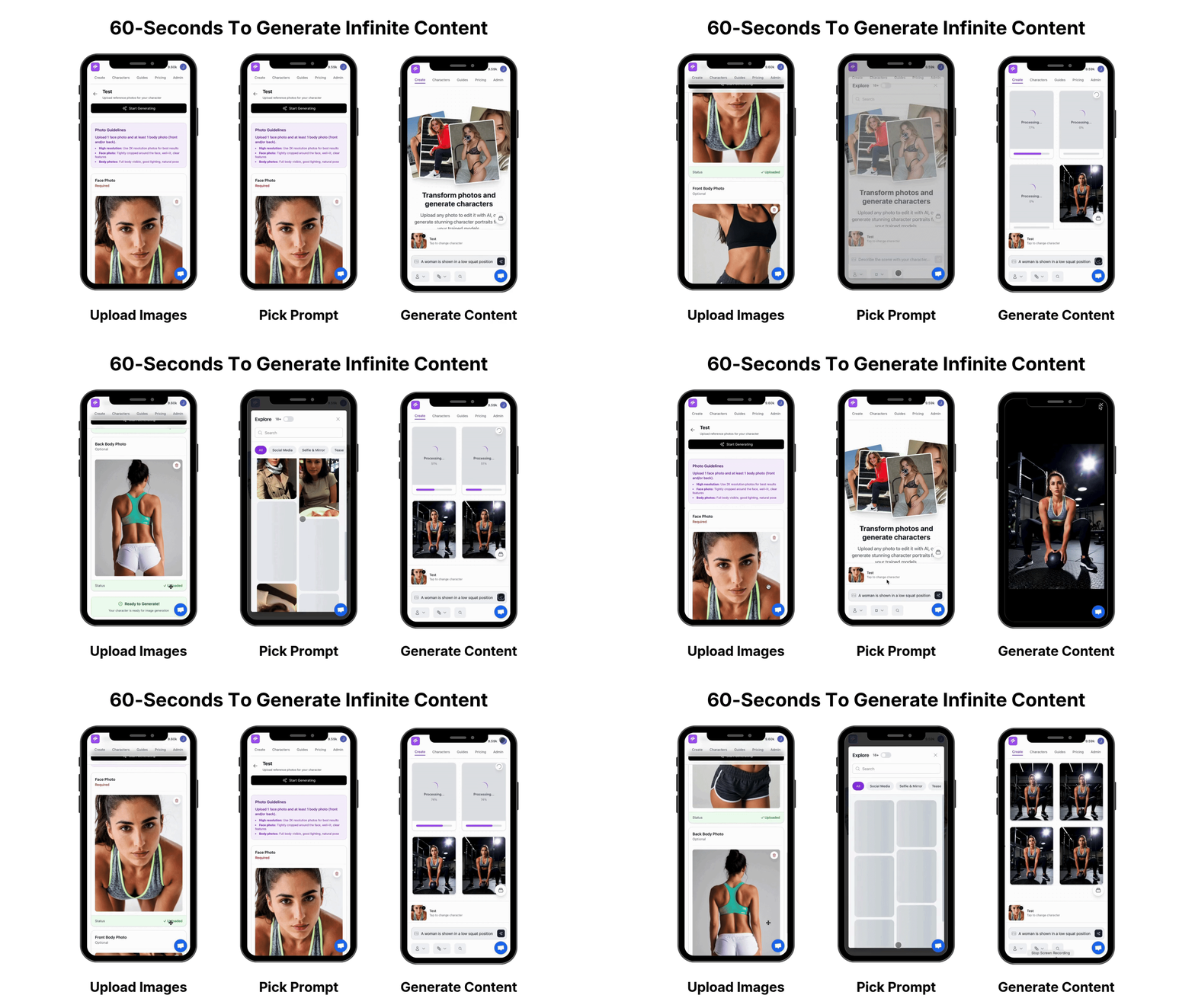
Locked likeness across an entire asset set separates a brand deliverable from a lucky frame. Build the sponsor’s world once, including their product, apparel, and preferred environment, and reuse it for every campaign you run with them. Brands using generative AI in creative production report turnaround reductions of 40 to 70 percent on asset-heavy campaigns. Sozee compresses that further by eliminating the prompt lottery entirely.
Produce Campaign Assets in an Afternoon
Stage 7 — Proof-Of-Delivery And Reporting
After production, the final stage focuses on proving what you delivered, which drives renewal.
Proof-of-delivery closes the loop and shapes whether the sponsor renews. Sixty percent of sponsorship renewals die due to unproven delivery. Send proof within 24 hours of publication, including screenshots with timestamps for digital placements, engagement metrics for social content, and reach data for stories.
Pull proof directly from your fulfillment tracker so the report reflects what was promised and what was delivered. Collecting proof as each deliverable goes live, rather than reconstructing it afterward, makes reporting easier and supports renewal conversations. A sponsor whose internal champion can show leadership a clean fulfillment report is a sponsor who renews.
What To Do When The Sponsor Is The Bottleneck
Sponsors sometimes miss deadlines, so your production schedule needs clear escalation language documented in writing.
Use the following sequence:
- Day 1 after a missed asset deadline: send a specific follow-up listing exactly what is outstanding and naming the downstream impact, such as “Without the vector logo by [date], the event banner cannot go to print and will be missing from the venue.”
- Day 3: escalate to the sponsor’s decision-maker with the same specific language and an adjusted timeline.
- Day 5: issue a formal timeline impact statement documenting the delay in the project record and stating the revised delivery date.
Partners will not tolerate missed deliverables, unclear timelines, disorganized handoffs, or unrealistic turnaround times, and that standard applies in both directions. If a deliverable is missed because the sponsor failed to provide assets on time, document it and offer a make-good or partial credit in writing. Flagging a missed or partially fulfilled deliverable as soon as it is identified, rather than staying silent, helps preserve sponsor trust.
Getting Sponsors Vs. Delivering For Sponsors: Why The Second Job Determines Renewal
Most content on sponsorship focuses on acquisition such as how to pitch, how to price, and how to close. The SERP overflows with that advice.
Forty percent of companies that avoid sponsorships cite insubstantial previous results as the reason, and inconsistent execution contributes directly to that perception. Getting a sponsor is a one-time event. Delivering for a sponsor is a repeatable system that determines whether the deal renews, expands, or disappears.
Agencies and operators who build delivery infrastructure such as intake forms, approval windows, real-time trackers, and AI-assisted production handle more deals without adding headcount. Teams that treat every sponsorship as a scramble cap out on production before they cap out on demand. The operational experience of being a sponsor determines renewal more than the pitch deck that closed the deal.
Common Mistakes When Delivering Sponsorship Assets
The following mistakes appear consistently across sponsorship fulfillment failures:
- Collecting Logos After The Deal Closes. Receiving a sponsor’s logo two days before the printer’s deadline leaves no time for revisions, and a low-resolution file discovered at that stage causes either a delay or a missing logo on all printed materials.
- No Approval Window. Without defined draft, feedback, and final timelines published upfront, deliverables stall indefinitely and sponsors manage the organization’s internal communication gaps themselves.
- Tracking In Email. Email chains are a black hole for context, where the latest approved version of an asset might be in a shared drive, the feedback that led to it in an email, and the approval itself in a Slack message.
- Treating Every Deliverable As Custom. Batching standard placements into templates is where speed compounds. Custom production reserved for high-value partners becomes a strategic choice instead of a default.
- Failing To Send Proof-Of-Delivery. An activation that goes undocumented is nearly as risky for renewal as one that never happened at all.
What Faster Looks Like: Success Metrics For Sponsorship Asset Delivery
A high-performing sponsorship asset delivery workflow hits these benchmarks:
- Intake form completed and assets received before kickoff call
- Draft delivered within 3 days of receiving all sponsor assets
- Sponsor feedback returned within 48 hours of draft delivery
- Final approval confirmed within 2 days of revised draft
- Full campaign asset set with multiple settings, outfits, and angles produced in an afternoon with Sozee
- Proof-of-delivery report sent within 24 hours of publication
The table below compares how each approach handles asset collection, approval tracking, production time, and likeness consistency.
| Attribute | Email Chains | Centralized Portal | Sozee AI Production |
|---|---|---|---|
| Asset Collection | Manual, scattered | Single upload link | N/A |
| Approval Tracking | Lost in threads | Built-in status | N/A |
| Production Time | Days to weeks | Days | Afternoon |
| Likeness Consistency | N/A | N/A | Locked across all assets |
Frequently Asked Questions
How Do You Collect Sponsor Assets Without Email Chains?
Use a centralized intake form with a single upload link sent at contract signing. Collect logo files in vector and PNG formats, brand guidelines, approved placements, deadlines, approved copy, usage rights, and primary contact details upfront. Platforms like SponsorCX and SponsorUnited support this workflow. The form should reject incorrect file formats at upload and timestamp every submission so there is no ambiguity about what arrived and when.
What Approval Window Should You Set For Sponsor Deliverables?
Set a 3-day draft window from the date all sponsor assets are received, a 48-hour feedback window from the date the draft is delivered, and a 2-day final approval window from the date the revised draft is delivered. Publish these timelines in your sponsor onboarding materials before the deal closes so both parties know what to expect. Assign a single named role as the accountable owner for each stage, and include an escalation path for when a stage stalls.
How Do You Track Sponsorship Deliverables In Real Time?
Use a shared tracker with columns for sponsor name, deliverable description, named owner, status, deadline, approval stage, and proof-of-delivery link. Use status categories of not started, in progress, at risk, blocked, and completed, with “at risk” and “blocked” as the two statuses that trigger immediate action. Automated reminders keep the tracker active and flag at-risk items before deadlines hit. Platforms like SponsorCX connect inventory directly to fulfillment and generate the tasks and timelines a signed agreement creates automatically.
What Are Common Mistakes When Delivering Sponsorship Assets?
The five most consistent mistakes are collecting logos after the deal closes instead of at contract signing, setting no approval window so deliverables stall indefinitely, tracking in email so the latest approved version is difficult to locate, treating every deliverable as custom instead of batching standard placements into templates, and failing to send proof-of-delivery, which most directly influences whether a sponsor renews.
What Should A Sponsor Asset Intake Form Include?
A sponsor asset intake form should collect logo files in vector and PNG formats, a brand guidelines document, approved placements with dimensions and safe zones, deadlines per deliverable, approved copy and messaging, usage rights and exclusivity terms, and the primary contact’s name, title, and email. Set a firm asset submission deadline on the form at least 14 days before any print production run and state the downstream consequence of missing it. Require a named individual with budget authority to complete the acknowledgment block.
How Do You Deliver Sponsorship Assets Faster With AI?
Use Sozee as described in Stage 6. Object and Outfit slots place products and apparel consistently while locked likeness keeps the same face across every asset. Photo Shoot turns one approved frame into a coherent set, and the Agent helps turn a rough brief into a ready-to-run shoot setup.
What Do You Do When A Sponsor Misses Their Deadline?
Send a specific follow-up on day one naming exactly what is outstanding and the downstream impact on your production schedule. Escalate to the sponsor’s decision-maker on day three with the same specific language and an adjusted timeline. Issue a formal timeline impact statement on day five, documenting the delay in the project record and stating the revised delivery date. Offer a make-good or partial credit if a deliverable is ultimately missed due to the delay, and document any make-good agreement in writing via email or contract amendment rather than verbal discussion.
Conclusion: Fix The Loop, Then Compress Production
The sponsorship asset delivery problem is an infrastructure problem rooted in the absence of a centralized intake form, standardized specs, defined approval windows, and real-time tracking. For a mid-sized operation managing 15 or more events with 20 or more sponsors, the total annual cost of spreadsheet-based coordination commonly falls between $50,000 and $200,000 when labor, rework, and revenue impact are honestly assessed. Fix the loop first with an intake form, specs, an approval window, and a tracker so the production leg becomes the easy part.
Then compress production with Sozee. Drop the sponsor’s product into the Object slot. Place their apparel in the Outfit slot. Lock the likeness. Run Photo Shoot and turn one frame into a full campaign deliverable in an afternoon. Schedule the whole thing from the Vault and move on to the next deal.
Micro-influencers stop leaving money on the table because they ran out of hours. Agencies stop waiting for creators. Sponsorship managers stop chasing logos and start delivering campaigns.