
Key Takeaways For Monetizable AI Characters
- A monetizable AI character needs a locked likeness, a documented persona, and policy-compliant presentation across every platform.
- Consistency covers identity lock, style separation, and reusable reference assets so the same face, body, and visual signature appear in every frame.
- Creators must meet platform rules on YouTube, Snapchat, TikTok, Instagram, and FTC disclosure upfront to avoid demonetization.
- A character bible that records name, visual signature, voice, content pillars, and disclosure language keeps the persona stable across teams and tools.
- Sozee supplies studio-style controls and reusable assets that help creators lock identity and scale monetizable AI characters.
Start Building Consistent Characters With Sozee
Why Consistency Is A Monetization Prerequisite
The face drifts between generations. Platform rules are murky. The creator cannot see which monetization path survives a policy review. These three problems compound each other. A drifting face signals mass production to platform reviewers. Murky rules mean creators discover violations only after demonetization. Without a clear monetization path, consistency work never turns into revenue.
Building a consistent AI character for monetization is an operational requirement that keeps a character inside platform eligibility. RM11’s 2026 Creator Monetization Framework identifies an inconsistent character bible as a fatal mistake that kills AI creator income. In that pattern, the face shifts between posts, the voice changes, and the style drifts. The report notes that AI audiences notice inconsistency faster than human audiences. Sponsors and platforms expect the same person every time. A drifting character gets flagged, demonetized, and dropped by sponsors before it ever reaches scale.
What “Consistent” Actually Means For Monetization
Consistency operates across three dimensions: identity lock, style separation, and reusable reference assets. Identity lock means the face, body proportions, and distinctive features such as a mole, hair texture, or jawline stay fixed regardless of setting, lighting, or outfit. Style separation means the visual mood of a shoot can change without changing the person. Reference assets mean the character can be reproduced reliably by any tool, any operator, on any day.
Character consistency functions as a brand asset: the same face, body, and visual signature across every frame, set, and platform so sponsors, platforms, and audiences recognize the same person every time.
Drift kills brand deals because sponsors buy a recognizable face rather than a single lucky frame. CreatorFlow’s Verified Revenue Analysis documents that revenue streams selling an artifact such as owned digital products, subscriptions, or serialized content survive disclosure intact. Streams selling a personal endorsement get harder once the account is labeled. A drifting character cannot sustain either stream. The artifact loses brand recognition and the endorsement loses credibility.
Documented AI influencer cases and creator guidance indicate that locking facial identity with a saved base image or character reference lock and saving a default voice profile help maintain a consistent persona. These sources present that consistency as central to sustaining audience engagement and revenue. When the character sounds like a robot one day and a professional voice actor the next, the illusion breaks. The same principle applies to visual identity.
Lock Your Character’s Identity In Sozee
How To Generate Consistent AI Characters: A 5-Step Workflow
This workflow is tool-agnostic. It describes the mechanism rather than the software, so it applies regardless of which generator a creator uses.
- Lock Identity. Use a reference image set or identity model so the face and body stay fixed across every generation. Front, quarter-turn, side profile, and back angles give any generation system enough signal to reproduce the same person reliably. Research On Large Performance Models confirms that omitting multi-view body references causes structural drift when a character turns away from the camera. These findings show that multi-angle reference assets are required for visual consistency.
- Separate Style. Stack a character identity layer with a separate style layer so backgrounds, lighting, and mood can change without changing the person. This structure lets a character appear in a gym, a café, and a studio without re-rolling the face.
- Build A Reference Sheet. Create a master sheet with front, quarter-turn, side profile, and back angles, plus expression templates and body references. Ablation Tests On Identity-Consistent Video Models show that omitting expression templates produces generic facial movements. The same degradation appears in static image generation.
- Define Persona. Document name, personality, voice, content pillars, and posting cadence in a character bible. The character bible becomes the operational document that keeps a consistent AI character aligned across a team and across platforms.
- Set Disclosure. Configure platform-native AI labels and FTC-compliant disclosure language before the first post goes live. Platform-Native AI Labels Do Not Satisfy FTC Disclosure Standards. They operate as separate, parallel requirements.
Common Pitfalls:
- Re-rolling prompts and losing the face.
- Treating consistency as only an image problem.
- Ignoring disclosure requirements.
- Assuming a generated character is automatically owned by the creator.
Platform Monetization Policy Walkthrough: YouTube, Snapchat, TikTok, And Instagram
No existing guide names YouTube’s July 2026 inauthentic content categories and Snapchat’s August 2026 Spotlight AI exclusion side by side as a compliance walkthrough. This section does exactly that and then maps how major platforms handle AI disclosure and payout eligibility so you can compare requirements at a glance.
YouTube. YouTube’s Inauthentic Content Monetization Policy, Clarified In July 2026, breaks non-monetizable content into three categories. The first is generic or repetitive content: template-made videos, image slideshows, minimal commentary, and AI-generated content made with generic or unoriginal templates that gives the impression of mass production without adding the creator’s original, authentic insights or perspective. The second is unsatisfying or off-putting content: emotionally manipulative formulas, interchangeable stories, shock-based imagery, and videos that stitch together unrelated or inconsistent AI clips. The third is AI personas on sensitive topics, such as content presenting itself as a human expert giving advice on health, legal issues, finances, or politics. YouTube’s Operative Standard is the creator’s transformative spin, meaning the human contribution that separates monetizable synthetic content from demonetized mass production. Disclosure Is Handled Via An AI Use Questionnaire In YouTube Studio. Applying the label does not itself affect monetization eligibility. Consistently failing to disclose can lead to content removal or suspension from the YouTube Partner Program.
Snapchat. Snapchat Updated Its Spotlight Monetization Policy In August 2026 to explicitly exclude content fully generated by AI tools from payout eligibility. The policy distinguishes between human-led creativity that uses AI tools as an assistive layer, which remains eligible for rewards, and fully automated AI pipelines that remove the human creator from the equation entirely, which are now ineligible for payouts. Snapchat’s Stated Goal Is To Keep Spotlight Focused On Authentic Creativity From Real People and to reward original perspectives, personal storytelling, and content people create and share themselves.
FTC. The FTC’s Official Guidance States That Disclosures Must Appear In The Opening Line Of Text Posts And Within The First Seconds Of Video Content. This timing rule sets a baseline requirement. Platform-native AI labels from TikTok, YouTube, or Instagram do not satisfy FTC disclosure standards. They operate as separate, parallel requirements. FTC penalties for AI disclosure violations can reach up to $53,088 per violation in 2026 (previously cited as $51,744 under the FTC’s Final Rule effective October 2024), and both the sponsorship and the AI nature of the persona must be disclosed.
The table below shows how each major platform handles AI disclosure and whether AI content remains eligible for payouts, so you can see where requirements diverge.
The Character Bible: Your Operational Consistency Document
The character bible keeps a consistent AI character aligned across a team and across platforms. It defines every attribute that must stay fixed regardless of who is running the shoot, which tool is being used, or which platform the content is headed for.
A complete character bible includes name, age, and origin, visual signature such as face, body, hair, skin, and distinctive marks, voice tone and register, content pillars, posting cadence per platform, disclosure language per format, and brand partnership guidelines. Without this document, consistency depends on memory, and memory drifts.
A worked example shows the operational standard in practice.
Example: “Maya Chen” — a 28-year-old fitness and wellness creator. Visual signature: shoulder-length black hair, warm undertone skin, small mole above left lip, athletic build. Voice: warm, direct, slightly playful. Content pillars: morning routines, workout form checks, supplement reviews. Posting cadence: 5x weekly on Instagram, 3x weekly on TikTok, 1x weekly long-form on YouTube.
Every attribute in Maya’s bible acts as a constraint that prevents drift. The mole above the left lip functions as a consistency checkpoint. If it disappears between posts, the character has drifted and the brand asset has degraded. Treat similar details in your own bible as fixed markers that make review and quality control faster.
Monetization Paths That Survive Policy Review
Revenue Streams For An AI Persona Sort By Whether The Buyer Needs To Believe A Human Is Behind The Account. Streams selling an artifact such as owned digital products, subscriptions, or serialized content survive disclosure intact. Streams selling a personal endorsement get harder once the account is labeled.
The monetization paths with the strongest policy survival record in 2026 are:
- Owned Digital Products. Ebooks, courses, prompt packs, and workout PDFs sold via Gumroad, Stan Store, or Whop. Yang Mun’s $23.99 Ebook Generated Approximately $11,275 Per Month from a wellness persona with 2.5 million Instagram followers. In that case, the product, not the platform payout, formed the core business.
- Subscriptions. Fanvue Explicitly Permits AI-Generated Media Within Stated Limits and publishes an 80/20 revenue split. Established AI Creators Charge $15–$25 For Subscriptions Without Losing Retention.
- Brand Partnerships. Brand Partnerships For AI Personas Begin Generating Inbound Interest Once The Persona Crosses 10,000 Followers On Instagram Or TikTok. Both the sponsorship and the AI nature of the persona must be disclosed under FTC rules.
- Affiliate Marketing. Available from day one. SaaS Affiliate Programs Pay 20–30% Recurring Commissions, creating a compounding revenue stream that monetizes content already published.
- Serialized Content. Pay-per-view drops and locked content sets. Pay-Per-View Content Is Where AI Creators Achieve Superior Margins Versus Human Creators Because Generation Cost Is Near-Zero.
Misleading-as-human presentation remains the fastest route to demonetization across every platform. YouTube Advises Creators Using Fictional AI Hosts To Label Them As Fictional And Avoid Titles, Thumbnails, Or Narration Implying Credentials Such As “Doctor,” “Lawyer,” Or “Licensed Adviser.”
IP And Ownership: What You Actually Own
Under Current U.S. Law, Copyright Protection Requires Human Authorship, a principle the U.S. Copyright Office reaffirmed in both its March 2023 Registration Guidance and its January 2025 Copyrightability Report. Material generated solely by AI, without sufficient human creative contribution, is not eligible for copyright protection. Prompts Alone Do Not Constitute The Requisite Human Authorship.
A Creator Using AI As Part Of The Character Design Process Can Still Register And Own Copyright If They Made Sufficient Human Creative Choices In Selecting, Arranging, Or Modifying The AI’s Output. Documenting those decisions at each stage of development is the safest way to support a registration application. The strongest claim sits in the human contribution to the character’s visual expression, such as creative selection, arrangement, or substantial modification, rather than in the fully machine-generated output.
Copyright’s Human Authorship Requirement Does Not Carry Over To Trademark Law. An AI-generated character could theoretically function as a trademark because trademark law asks whether consumers perceive it as identifying the source of goods or services, not how the character was created. Trademark can protect a character’s name and source-identifying features even when copyright cannot. For brand deals, that distinction matters. Licensors and sponsors often care about name, logo, and brand recognition rather than only the image file itself.
Copyright And Contractual Rights Are Distinct: A Platform Or Service Can Allocate Output Ownership By Contract, But That Does Not Override The Underlying Copyright Rule Requiring Human Authorship. Creators must review the terms of service of every tool they use to understand what rights they actually hold over generated outputs. Ownership settled, the remaining operational challenge is keeping the same character recognizable as it moves between platforms with different formats and rules.
Cross-Platform Consistency Workflow: Instagram, TikTok, And YouTube
Format, aspect ratio, and disclosure differ across platforms, yet the character must remain recognizable. Each platform’s rules and formats form part of the consistency problem, not an afterthought.
- Instagram. Profile-Level AI Label Required For AI-Generated Persons. Reels and carousels run in 9:16 and 1:1 aspect ratios. Meta Applies An AI Info Label Driven By Industry Provenance Signals Plus Creator Self-Disclosure.
- TikTok. AI-Generated Content Toggle At Upload; C2PA Content Credentials. The platform uses a 9:16 aspect ratio. A First Disclosure Violation Triggers Retroactive Labeling, A Warning, And 48 Hours Of Reduced Distribution.
- YouTube. AI Use Questionnaire In Studio; Altered Or Synthetic Content Label Applied Above The Expanded Description For Long-Form And As A Direct Overlay On Shorts. Long-form uses 16:9, while Shorts use 9:16.
FTC disclosure requirements apply across all three platforms independently of platform-native labels. For Short-Form Video On TikTok, Instagram Reels, And YouTube Shorts, FTC-Compliant AI Disclosures Must Appear Verbally Or On-Screen Within The First 3 Seconds. For long-form video over 10 minutes, disclosure must appear within the first 30 seconds and reappear at natural content breaks before product integrations.
Why Sozee Is Built For Monetizable Consistency
The workflow, policy, and ownership rules above all point to the same operational need: a locked identity that survives every generation. That need is the problem Sozee was built to solve. Most AI tools give creators a prompt box. Sozee gives creators a studio, where every decision becomes a control that can be set and set again.
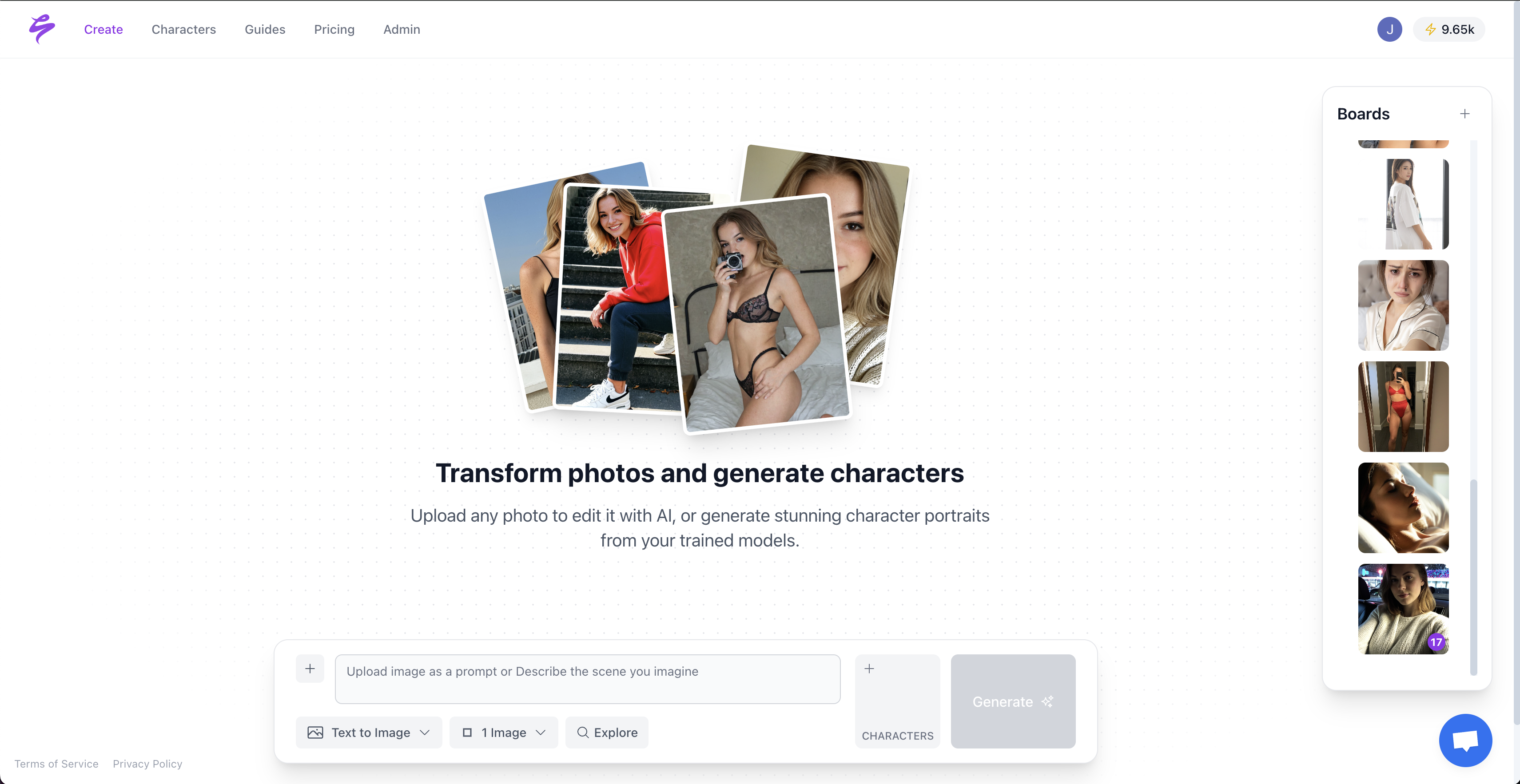
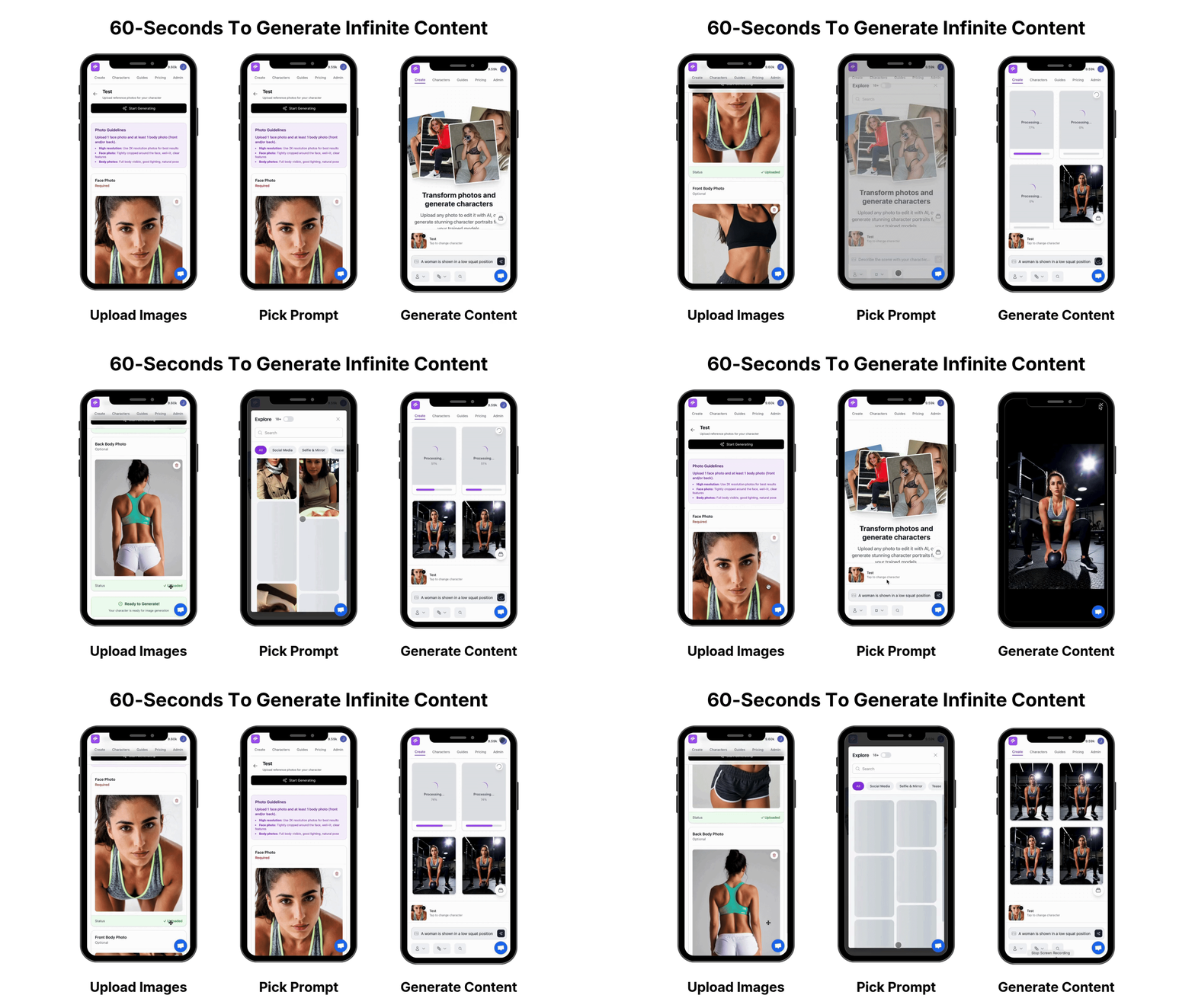
Sozee locks likeness across an entire set rather than a single lucky frame. Photo Control turns the prompt bar into a director’s panel with five deliberate dimensions: Setting, Outfit, Shot style, Expression, and Object. Every meaningful decision becomes a repeatable control. The character’s face and body stay fixed across every generation because the identity model is locked instead of re-rolled.
Reusable environments, outfits, and objects compound instead of being retyped. A location built from up to four reference shots becomes a space the creator can shoot in for a year, and an outfit assembled from one piece per category such as tops, bottoms, shoes, and accessories assembles a full look automatically. Because both are saved rather than re-described, every shoot makes the next one faster. The character’s world shifts from something to rewrite each time into something the creator owns and reuses.
Photo Shoot takes a single image and builds a coherent locked set of up to ten around it. Identity, outfit, and environment stay fixed while angle, pose, and expression move. A month of content can come from one frame. The Agent sets up the shoot for creators who would rather not touch the controls. It interviews the creator into a finished setup and writes directly into the prompt bar and Photo Control panel. When the conversation ends, the shoot sits one tap from Generate. Native scheduling and analytics then prove what Sozee posted versus what the creator posted, so the contribution to the business is measurable.
For agencies running a roster, Teams and isolated workspaces mean one login covers every client while keeping them fully separated. Each workspace holds its own characters, vault, connected accounts, and credits.
Build Policy-Proof Shoots In Sozee
Frequently Asked Questions
Can You Monetize AI-Generated Content On YouTube And Snapchat?
Yes, with conditions. YouTube’s monetization standard targets inauthenticity and repetitiveness rather than the mere use of AI tools. Content that adds the creator’s original, authentic insights or perspective, often called the creator’s transformative spin, stays inside YouTube Partner Program eligibility. Content that is template-made, mass-produced, or presents an AI persona as a human expert on health, legal, financial, or political topics is ineligible. Snapchat’s Spotlight program excludes fully AI-generated videos from payout eligibility as of August 2026. Content where AI functions as an assistive layer on top of human creative input remains eligible. The human-creative threshold operates as the standard on both platforms.
Who Owns The IP Of A Generated Character?
As covered in the ownership section, copyright requires human authorship, and a creator’s strongest claim sits in the human contribution to the character’s visual expression. Prompts alone do not meet that threshold. Trademark law operates separately. An AI-generated character’s name and source-identifying features may be protectable through trademark registration even when copyright cannot attach. Platform terms of service can allocate output ownership by contract, but those contractual rights do not override the underlying copyright rule requiring human authorship. Creators should document their creative decisions at each stage of development and review the terms of service of every tool they use.
How Do Disclosure Requirements Differ Across Platforms?
Each platform has its own disclosure mechanism, and none of them satisfies FTC requirements on its own. YouTube requires an AI use questionnaire in YouTube Studio, and selecting yes triggers an altered or synthetic content label. TikTok requires an AI-generated content toggle at upload and reads C2PA Content Credentials automatically. Instagram applies a profile-level AI label for AI-generated persons, and Meta applies an AI info label across Facebook and Instagram driven by provenance signals and creator self-disclosure. The FTC timing rules described earlier apply on top of these platform labels. Platform-native labels and FTC disclosures function as separate, parallel obligations. EU AI Act Article 50 transparency rules apply from August 2, 2026 for EU distribution, with fines reaching €15 million or 3% of worldwide annual turnover.
What Is The Best Way To Keep An AI Character Consistent Across Platforms?
The most reliable method combines a locked identity model or reference image set with a documented character bible and a reusable asset library. The reference image set, including front, quarter-turn, side profile, and back angles plus expression templates, gives any generation system enough signal to reproduce the same person reliably. The character bible described earlier documents every fixed attribute, so the workflow can focus on execution. The reusable asset library, made of saved environments, outfits, and objects, means the character’s world can be reproduced without re-describing it from scratch. Style changes such as backgrounds, lighting, and mood run through a separate style layer that does not touch the identity layer. This separation allows a character to appear across Instagram, TikTok, and YouTube in different formats and aspect ratios without drifting.
What Is The Best Monetization Path For An AI Character In 2026?
The paths with the strongest policy survival record are owned digital products, subscriptions, and serialized content, which sell an artifact rather than a personal endorsement. Owned digital products such as ebooks, courses, and prompt packs survive disclosure intact because the buyer is purchasing the product, not the persona’s authenticity. Subscriptions on platforms that explicitly permit AI-generated media, such as Fanvue, provide recurring revenue that compounds with audience growth. Brand partnerships generate the largest headline numbers but require both FTC-compliant disclosure of the commercial relationship and disclosure of the AI nature of the persona. Affiliate marketing is available from day one and monetizes content already published. Operators who reach profitability fastest activate four or more revenue streams in parallel, post daily under a stable character bible, and handle FTC-compliant disclosure on every brand placement.
Launch A Revenue-Ready Character In Sozee
Advanced Strategies And Next Steps
Creators who have locked a character’s likeness and established a monetization baseline can move into three compounding growth paths.
Reusable Asset Libraries. Every environment, outfit, and object built for one shoot becomes an asset that reduces the cost of every subsequent shoot. The compounding effect is the point. A bedroom environment built once can be shot in for a year. A brand’s product dropped into the Object slot can be placed across every setting in the library without re-describing the product. Operators running a roster of characters across multiple niches can share environments and style layers while keeping identities isolated.
Licensing And Brand Extensions. A Creator Who Licenses A Character Must Use A Written Agreement Defining The Scope, Territory, Duration, And Quality Control Standards. Trademark registration of the character’s name and source-identifying features provides the strongest foundation for licensing because trademark can last indefinitely if maintained, while copyright in AI-assisted works depends on the degree of human creative contribution. The Virtual Influencer Market Reached $6.33 Billion In 2024 And Is Projected To Hit $111.78 Billion By 2033, representing a 38.4% compound annual growth rate. That scale turns licensing into a structural opportunity.
Scaling Across A Roster. Blur Studios Operates Five AI Characters On A Shared Production Pipeline, With 5–10 Minutes Of Production Per Video, a roster model that distributes fixed production costs across multiple revenue streams. The agency model prices AI Influencer-as-a-Service at a setup fee plus a monthly retainer, meaning two clients can generate $2,000 per month in predictable recurring income before any platform revenue is counted. Sozee’s Teams and isolated workspaces are built for exactly this structure: one login, every client, fully isolated, with native scheduling and analytics that prove the contribution per character.
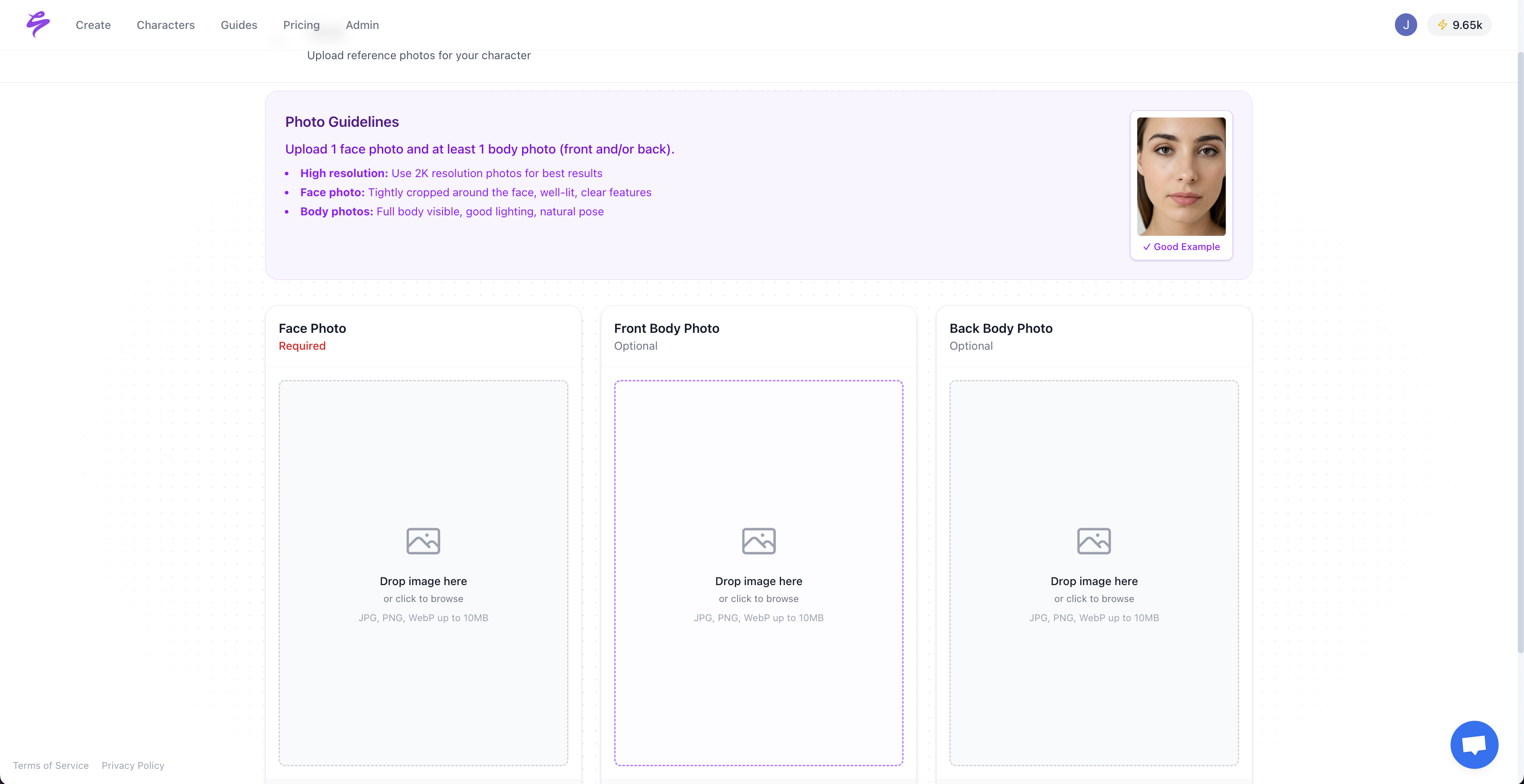
The consistent AI character functions as a brand asset that earns revenue, survives policy review, and scales without the creator’s physical availability as a constraint. Every element of the workflow, including locked identity, reusable world, compliant disclosure, and documented persona, becomes infrastructure that compounds over time.
Scale Your AI Character Roster With Sozee