
Key Takeaways
- Brand-side platforms focus on creator discovery, outreach, campaign workflow, product seeding, and ROI measurement. Creator-side and agency-side tools handle roster management, deal pipeline, contracts, invoicing, and content production.
- Buying the wrong category is the most expensive mistake in creator management software. The two types are not interchangeable and often force a full stack rebuild at renewal.
- Brand-side options like CreatorIQ, Upfluence, Modash, GRIN, and Aspire vary widely in pricing, trial terms, and ecommerce integrations, with most requiring demos or annual contracts.
- Creator-side and agency-side platforms cover the operational gap that brand tools ignore, including deliverables tracking, payments, and content production at volume.
- Sozee is the leading creator management software for creators and agencies, with locked likeness, reusable assets, native scheduling, and isolated team workspaces that replace multiple tools.
Brand-Side Creator Management Platforms: The Shortlist
Brand-side creator platforms vary sharply in price, trial access, and ecommerce integrations, so choosing the wrong one gets expensive fast. The table below shows how widely these platforms differ, which is why picking the right category before the right tool matters. It covers published entry pricing, trial terms, and native ecommerce integrations for the five most-evaluated brand-side platforms. Every figure links to its source. Where pricing is not public, the table says so plainly.
CreatorIQ is best for enterprise brands with $1M+ influencer budgets and dedicated in-house teams. It has no public pricing, runs on quotes, and uses a sales-led motion with no self-serve signup or free trial. Third-party procurement data puts annual contracts at a median of $39,250/year, with a typical range of $30,000 to $59,500/year. Integrations include Instagram, TikTok, YouTube, Facebook, Snapchat, Shopify, Google Analytics, DocuSign, Tableau, Sprinklr, PayPal, Awin, impact.com, Rakuten Advertising, and Partnerize. Limitation: users report a 2–4 week onboarding window and a steep learning curve. Creator payments typically route through integrations rather than running as a native, end-to-end flow.
Upfluence is best for D2C and ecommerce brands with $50K+ annual influencer budgets and a dedicated program owner. It has no public pricing and uses quote-based plans behind a demo call. Modular pricing runs $399/month each for the Search and Contact module, the Workflow module, and the Payments module, plus $79/month per additional seat and a one-time $695 community onboarding fee, for a realistic entry cost of roughly $14,000–$16,000/year. Native integrations include Shopify, WooCommerce, Magento, BigCommerce, and Amazon Attribution, plus Klaviyo, Hootsuite, Gmail, Outlook, Zapier, and Stripe via Upfluence Pay. Limitation: a 12-month annual contract is standard and is the most common Trustpilot complaint, with brands reporting they believed they signed up for a trial month.
Modash is the most budget-friendly option for creator discovery and vetting across Instagram, TikTok, and YouTube. It publishes transparent pricing from $199/month billed annually ($299 monthly), with Performance at $499/month billed annually ($599 monthly) and Enterprise starting at $14,700/year, plus a 14-day free trial capped at 20 profile views, 6 email unlocks, and 10 tracked creators. It offers native Shopify integration for gifting, affiliate tracking, discount code generation, and sales attribution, and handles built-in global creator payments in 180+ countries across 36 currencies. Limitation: it focuses on discovery only, so workflow and payments beyond its own scope require separate tools, and CSV/Excel export is gated to the Performance plan and above.
GRIN is best for relationship management and product seeding and gifting workflows tailored to online stores. It moved to instant signup in 2026 with a free tier and month-to-month plans starting at $399, integrating directly with Shopify to connect creator content to sales. Limitation: it is built for organizations with dedicated creator operations teams and does not suit solo operators, and onboarding takes time.
Aspire is best for running long-term ambassador programs and managing UGC pipelines. Pricing is custom and enterprise-oriented. Aspire does not offer a free trial and instead provides a guided demo followed by a custom quote based on company size and needs, with pricing remaining quote-only and custom. Its Curated Creators add-on prices invites at $300 per month for 600 invites, with named customers including M&Ms, Keurig, Samsung, and HelloFresh. Limitation: some users report a learning curve on reporting.
For agency-specific platform coverage, see Creator Management Software Agencies: Top Platforms 2026. While brand-side platforms dominate the market, they leave a significant gap for creators and agencies. The next section explains that gap and how creator-side tools address it.
Creator-Side And Agency-Side Creator Management Software: The Gap Nobody Covers
Creator-side and agency-side tools form a distinct category that covers creator CRM, roster management, deal pipeline, deliverables, contracts, invoicing, and content production. A creator management platform is bought by the agency that represents creators and manages the roster, while an influencer marketing platform is bought by the brand that hires creators and manages campaigns. Most roundups focus on the brand side and skip this operational layer entirely.
Sozee is the strongest creator management software for this side of the table. Para-competitors like HiggsField, Krea, and Pykaso ship a prompt box, while Sozee ships a studio built specifically for creators and agencies who monetize content at volume.
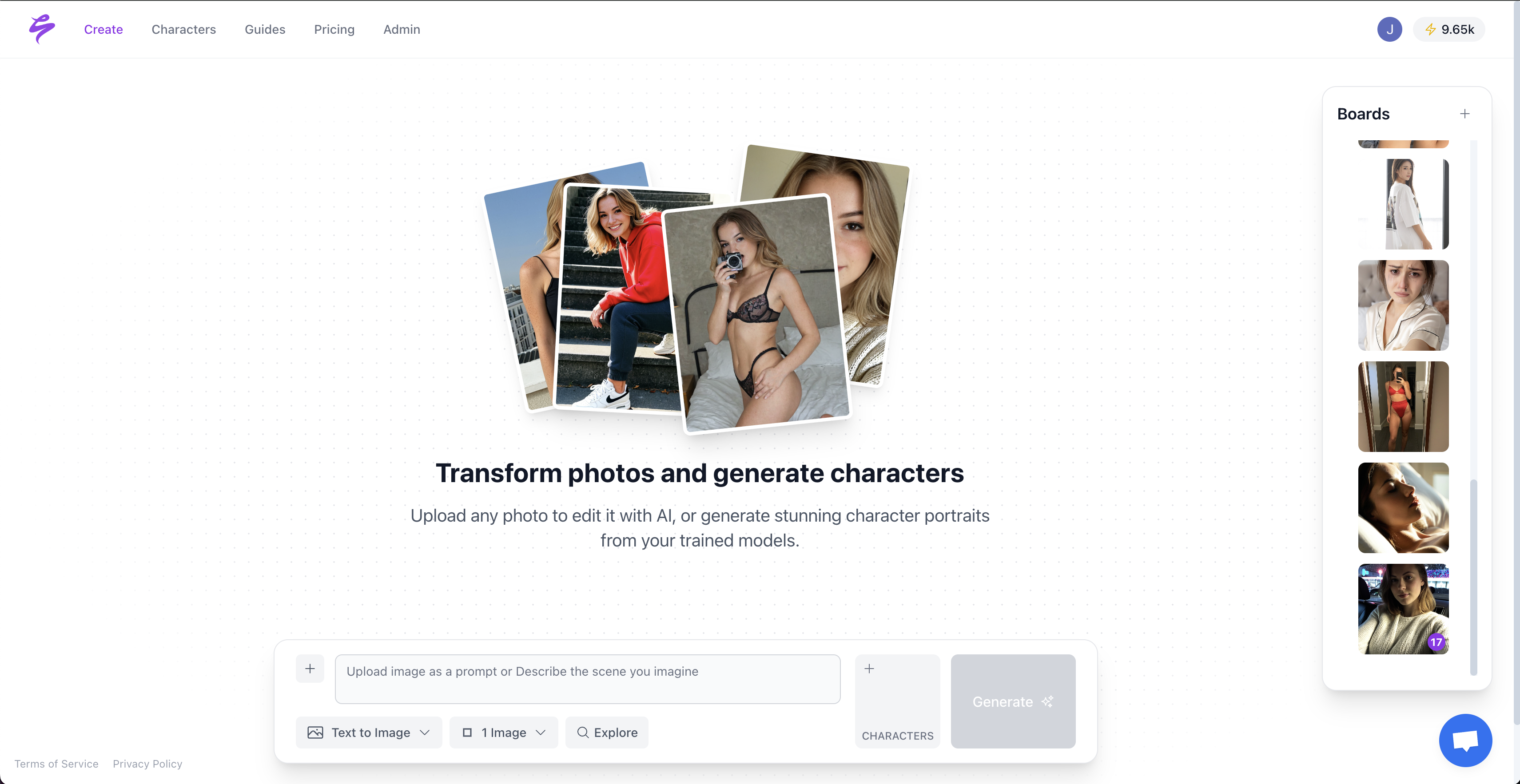
In operator terms, Sozee delivers a set of capabilities that directly address these operational gaps:
- Locked likeness across an entire set, with the same face, body, and world in every generation, every week.
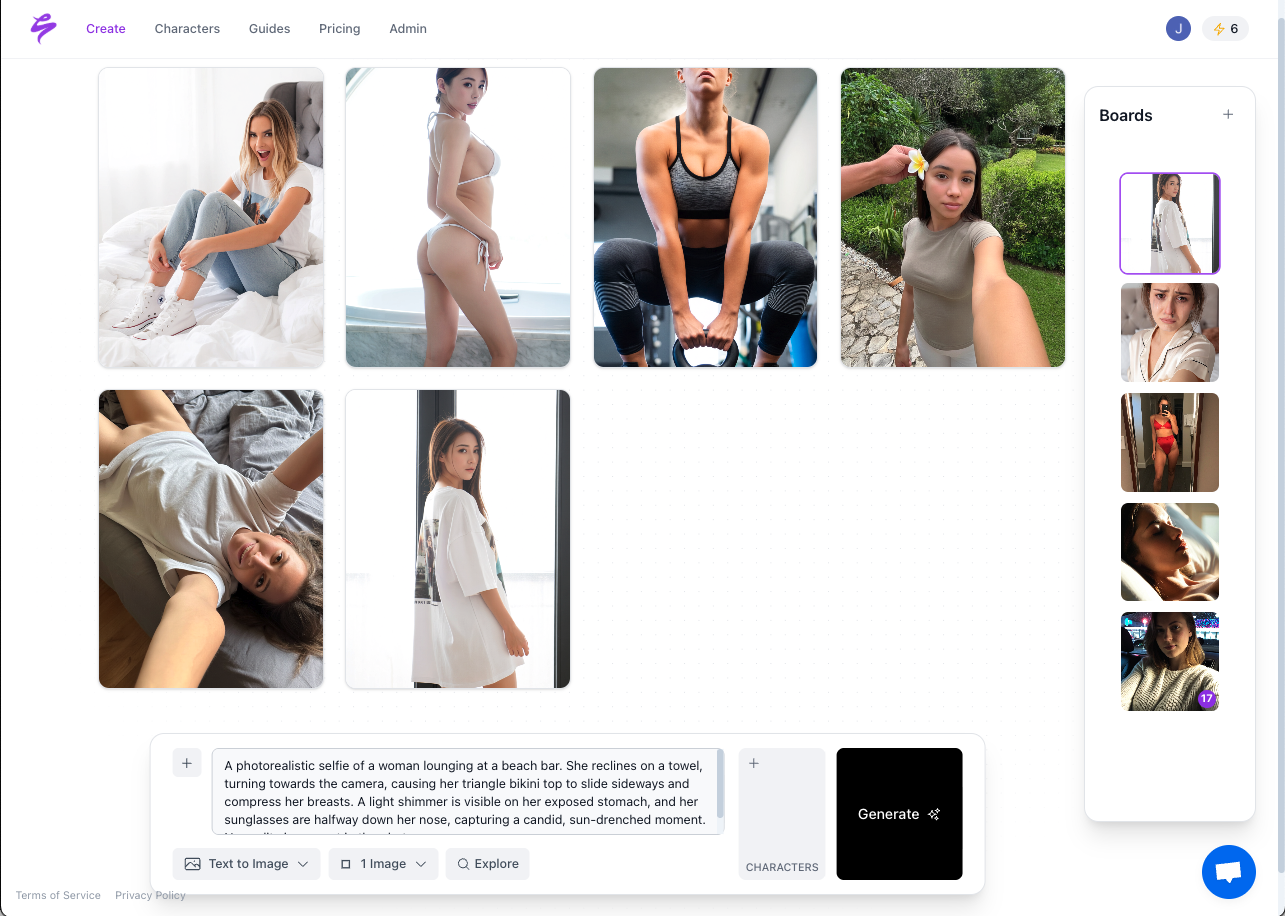
- Reusable environments, outfits, and objects as reusable assets that compound over time. Build a setting once and shoot in it for a year.
- Photo Control’s five directable dimensions for Setting, Outfit, Shot style, Expression, and Object, which turns the prompt bar into a director’s panel.
- Photo Shoot, where one frame becomes a locked, coherent set of up to ten. A single image can power a month of content.
- The Agent, which sets up the shoot rather than answering questions. It interviews you into a finished setup and writes directly into the prompt bar and Photo Control panel, so the conversation ends one tap from Generate.
- Native scheduling and analytics with per-character scheduling to Instagram, TikTok, X, Facebook, Reddit, and Fanvue, plus a split between what Sozee posted and what you posted so you can see exactly what the platform contributes.
- Isolated team workspaces that provide one login for every client, fully isolated. An agency runs its whole roster from one account, with each workspace carrying its own characters, vault, connected accounts, and credits.
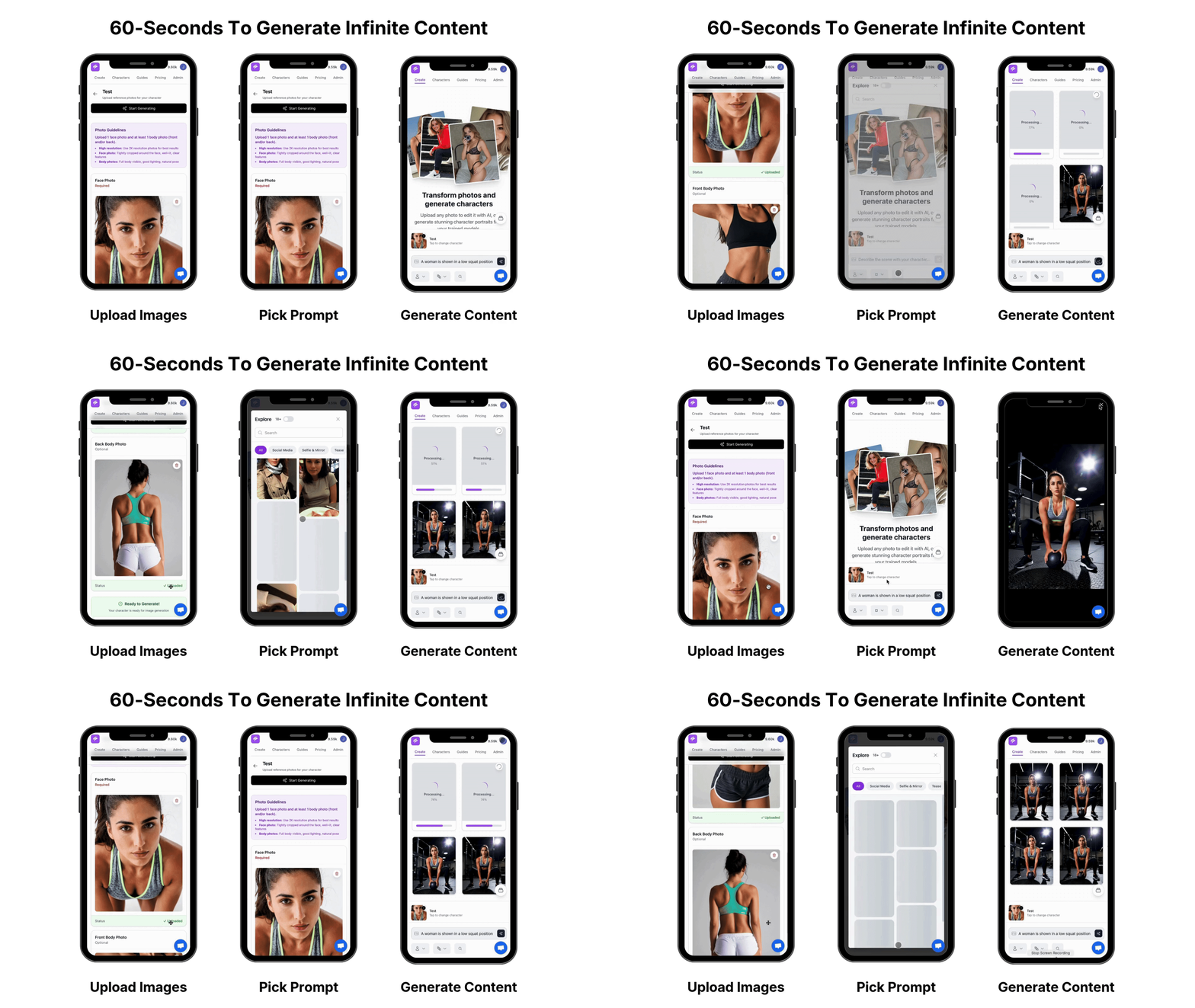
Sozee serves agencies, top creators, micro-influencers, anonymous and niche creators, and virtual influencer builders. It handles the full loop from cast to publish, covering character creation, direction, content generation, refinement, scheduling, and analytics, without exporting to five other tools to run the business. Reel cloning lets creators paste an Instagram, TikTok, or YouTube link and Sozee rebuilds its motion in their likeness, so proven formats become repeatable assets on demand.
Best Creator Management Platforms: Complete 2026 Guide covers the full platform landscape in more depth.
Start Your Free Sozee Workspace
What Platform Do Most Influencers Use For Their Daily Stack?
Most creators rely on a lightweight tool stack for day-to-day production and posting. Most creators build their stack around a video editor (CapCut or DaVinci Resolve), a design tool (Canva), an AI writing assistant, and a social media management platform for scheduling, analytics, and community management. Most creators can operate effectively on $20 to $50 per month in total tool costs.
Native platform tools remain the default for many creators. TikTok’s Creator Portal, Instagram’s Professional Dashboard, and Meta Creator Studio provide first-party analytics such as audience demographics, follower activity patterns, content performance metrics, and traffic sources at no cost.
These tools do not manage a roster, a deal pipeline, deliverables, contracts, or invoicing. Notion’s free personal tier and Trello’s free plan for up to 10 collaborators handle the business layer of deal tracking for creators doing a few deals a month, but they do not support content production at volume. That production and operations layer is the gap that brand-side platforms ignore and the space where Sozee operates.
Is There Free Creator Management Software?
Free tiers and trials exist across the ecosystem, yet they stop well short of full creator-side operations.
On the brand side:
- GRIN offers a free tier with instant signup.
- Modash offers a 14-day free trial capped at 20 profile views, 6 email unlocks, and 10 tracked creators.
- Upfluence’s free trial is set up only after an initial call.
- CreatorIQ offers no free plan and no self-serve trial.
On the creator side:
- Notion’s free personal tier and Trello’s free plan for up to 10 collaborators run the business layer of deal tracking.
- Shopify Collabs is free for Shopify merchants.
A creator doing a few deals a month can run largely on free tiers, while shipping weekly for multiple brands justifies paid tiers. Free tiers and trials cover discovery or tracking, not roster management, contracts, invoicing, or content production at volume. That is the point where free options stop being viable for serious operations. For creators focused on Instagram, however, the right paid tooling can turn that workload into consistent revenue.
Best Creator Management Software For Instagram
Instagram hosts more than 64 million influencer accounts worldwide, and roughly 91% of them are nano influencers with fewer than 10,000 followers. Instagram leads brand partnership adoption at 57%.
For creator-side operators, Sozee supports Instagram directly. It offers per-character scheduling to Instagram and reel cloning from Instagram links, so you paste a link and Sozee rebuilds its motion in your likeness. A proven Instagram format becomes a repeatable asset rather than a one-time production.
Instagram creators average $81,700 annually compared to $44,250 on TikTok and $25,600 on Twitch. Instagram-specific tooling therefore matters for creator-side revenue. The platform is both the largest and the most lucrative per creator, and production consistency compounds directly into income.
What Actually Goes Wrong After You Buy
Brand-side failures cluster around three recurring patterns that compound each other. Onboarding friction, as CreatorIQ’s 2–4 week onboarding window and steep learning curve, delays time-to-value. Contract terms, such as Upfluence’s 12-month annual commitment that many users thought was a trial month, create financial risk. Creator adoption issues, including low response rates and weak conversion from Upfluence-sourced creators despite significant spend, with outreach personalization still requiring hours of manual work each week, undermine campaign performance. Together, these patterns explain why brands often struggle to realize ROI.
Creator-side and agency-side failures follow a different pattern that centers on scale. Most talent managers hit a wall managing a roster somewhere between 10 and 20 active creators, when the tracker that used to work starts silently dropping deadlines. Rosters break down in three specific places: deliverable review, payments to creators and contractors, and reporting to brands. Agency software typically stops at issuing an invoice rather than collecting payment, so agencies running twenty or thirty brand deals a quarter find that chasing late payers becomes its own job.
Payment and compliance failures are the most operationally expensive. International wire transfers for creator payments routinely cost $25 to $50 per transfer and take three to five business days. They also hide additional fees inside unfavorable exchange rates. The IRS raised the 1099 reporting threshold from $600 to $2,000 per payee for payments made on or after January 1, 2026, which changes paperwork requirements without changing underlying tax liability.
Sozee’s built-in compliance, verification, and Agent checkpoints are integrated into character setup and shoot creation. Compliance and verification live inside character setup rather than being bolted on afterward. The Agent creates checkpoints at every step of the shoot setup that you can rewind to. Isolated team workspaces keep deliverable review, brand reporting, and content approvals organized per client instead of collapsing into a shared queue.
FAQ
How Do I Choose Between Brand-Side And Creator-Side Creator Management Software?
The deciding factor is which side of the transaction you sit on. If you are a brand allocating budget to find, brief, and measure creators, you need a brand-side platform that covers discovery, outreach, campaign workflow, product seeding, and ROI measurement. If you are a creator, talent manager, or agency representing creators, you need creator-side software that covers roster management, deal pipeline, deliverables, contracts, invoicing, and content production. The most common and expensive mistake is an agency buying a brand-side tool, which models the roster as a target list rather than a managed portfolio. Evaluate the category first, then the specific platform.
What Does The Best Creator Management Software Cost?
Brand-side costs span a wide range. Modash starts at $199/month billed annually with a 14-day trial. GRIN offers a free tier and month-to-month plans from $399. Upfluence runs roughly $14,000–$16,000/year on a 12-month contract. CreatorIQ contracts median at $39,250/year with no self-serve access. Aspire is custom-quoted at the enterprise level. Creator-side and agency-side software varies by model, with some tools charging per creator per month, some charging a percentage of payments processed, and some charging a flat monthly fee. A solo creator doing a few deals a month can run largely on free tiers. An agency managing 20 or more active creators with frequent brand deals will typically justify a paid platform to avoid the operational wall that manual trackers hit.
Are Free Creator Management Options Viable?
Free creator management options work for limited use cases and low volume. GRIN’s free tier ($0/mo) covers every Gia capability, unlimited CRM, and the affiliate program (links, discount codes, GMV tracking), but is limited to 200 monthly credits with no overage, so it supports only a limited amount of work. Modash’s 14-day free trial is functional for initial vetting, allowing testing of key features and evaluation of fit, as mentioned earlier with its caps on profile views, email unlocks, and tracked creators. Notion’s free personal tier and Trello’s free plan handle deal tracking for creators at low volume. Shopify Collabs is free for Shopify merchants. The ceiling on free tiers is consistent across tools. They cover discovery or basic tracking, not roster management, contracts, invoicing, or content production at volume. A creator shipping weekly for multiple brands, or an agency managing more than ten active creators, will hit that ceiling quickly. Free tiers work as a starting point, yet they do not support a long-term operating model for serious creator businesses.
How Does Sozee Fit Into The Creator Management Software Category?
Sozee operates at the creator-side and agency-side layer, serving creators and agencies rather than brands. It does not function as a discovery or outreach tool for brands. It is an AI content studio that handles the full production and publishing loop: character creation, shoot direction, image and video generation, content refinement, scheduling across platforms, and analytics that split Sozee-posted content from creator-posted content. For agencies, isolated team workspaces let one login manage an entire roster with per-client separation. For creators, locked likeness and reusable environments mean every shoot compounds into a library of assets rather than starting from scratch. Sozee sits where the production bottleneck actually lives, between the deal and the deliverable, which is the gap no brand-side platform addresses.